Search This Blog

Showing posts with label fiction for men. Show all posts

Sunday, November 19, 2017

Numbah-Juan Best Sellah!

Yes, that's right: my dystopian thriller, False Flag (third in the Retreads series) thrust into Amazon's Top 100 in the paid Kindle Store. Before I went to bed Saturday night it had reached #69 over all.


Even cooler, it reached #1 bestseller in three categories that I know of: Men's Adventure; thrillers>political; and thrillers>conspiracies. Having learned my lesson from last year when Hell and Gone became a bestseller but I didn't document it very well (or use best-selling status as a selling point), this time I've gone crazy screen-shotting everything. I'm now like that annoying uncle at your family reunion with a stack of photos from his glory days on the high school track team, ambushing relatives who he can force to relive his 15 minutes of fame with.

What's that? You have no such uncle? Well, you've got the next best thing now, buddy.


I'm expecting sales to fall off today, so I don't know if False Flag can improve from #2 in Dystopian (right between A Handmaid's Tale and Starship Troopers), Action-Adventure, and Post-Apocalyptic. In that last genre, something must have been going on because the top eight bestsellers were shuffling around quite a bit. Mine may have actually hit #1 for a hot second--if so, I didn't catch it.

So, I'm like a kid in a candy store (or an annoying uncle with a photo album). But YOU need to jump on this bandwagon and make me a little richer...er, I mean do your part to help spread love, enlightenment, Christmas cheer, or something.

All these images are from Amazon, but it's on sale everywhere where E-Books are sold...FOR LIMITED TIME ONLY! I won't post links because it's not hard to find...MUAHAHAHAHAHA...!

Saturday, September 28, 2013

Fight Card is Going the Distance


Real life keeps getting in the way of my blogging. It occurred to me the other day that there's been a lot of news to blog about, and I missed quite a lot of it.

Thankfully, when it comes to good books, it's never too late...not in the post-publishing-revolution world, anyway. There's no reason why good books ever have to go out of print, now. (I wish the not-so-good ones would, but that's another matter.)

That said, it's time to bring you up to date on Paul Bishop and Mel Odom's Fight Card series. I was fortunate enough to be one of the authors to contribute to the series writing under the "Jack Tunney" house name, and my Fight Card e-book has just recently been released as an Audible recording.

I am in good company. Plenty of talented writers have written one or more retro-boxing pulp to the series, and so far I've enjoyed each one I read. Meanwhile, Fight Card has spawned a couple spinoffs.

The original series is anchored to the 1950s and has been estrogen-free, but now there is Fight Card MMA (Mixed Martial Arts--contemporary) and Fight Card Romance. Below is a sampling of the titles which have been released since I last blogged about Fight Card.

FIGHT CARD: GOLDEN GATE GLOVES
San Francisco 1951
Conall O’Quinn grew up at St. Vincent’s Asylum For Boys, a Chicago orphanage where he learned the sweet science of boxing from Father Tim, the battling priest. After a stint in the Army, Conall finds work on the docks of San Francisco – a place where his fists make him the dock champion.  Soon, however, he gets on the bad side of a union boss and is set up for a dock side brawl designed to knockout his fighting career.  When Conall comes out on top, things go from bad to worse when he is framed for the docks going up in flames. 
Along with Benson, his best friend and trainer, Conall heads for the hills in search of a lost treasure in the vicinity of a mine controlled by the union boss.  However, where Conall goes trouble follows and he is quickly embroiled in a heated grudge match between fist-happy miners and lumberjacks.
Championing the miners in an all out slugfest, Conall is about to find out there is more to fighting than just swinging fists … giant, hammer-fisted lumberjacks, the mine owner’s beautiful daughter, union flunkies, and mob thugs all want a piece of him … and when the opening bell rings, the entire world appears to be against him …

 
FIGHT CARD: BROOKLYN BEATDOWN


Brooklyn – 1954.


Bare knuckler brawler Levi Kimro battles his way through the bloody backroom ghetto bars of Brooklyn in pursuit of his dream of owning his

 own business. It’s a hard and vicious road he walks and it becomes even more complicated when he falls hard for the electrifying Dorothea McBricker.


Dorothea’s brother, Teddy, has fallen under the influence of notorious gangster Duke Williamson – a powerful man who is pressuring Levi to join his stable of fighters or face off against the human killing machine, ‘Deathblow’ Ballantine. A knock-down, drag out, Brooklyn Beatdown is brewing, and Levi will need every ounce of his fighter’s heart if he wants to save not only himself, but the woman he loves …


FIGHT CARD: CAN’T MISS CONTENDER


St. Louis, Missouri, 1958


Billy Flood was the kind of boxer who had ‘can’t miss’ written all over him.  He had the tools and talent to make him a middleweight champion.  But a few wrong turns changed everything.  Now, after a hard three year stretch inside the Missouri State Penitentiary, Billy is determined to get back in the ring and punch his way to the top. But, while other fighters his age have risen through the ranks, Billy is back where he started – fighting palookas, catchers, and tomato cans.


With his past on his heels and his future filled with obstacles, Billy finds himself backed into a corner by false friends and an unscrupulous promoter.  He may get his shot at becoming a contender, but will it cost him his future?  Can’t Miss Contender is another hard punching Fight Card tale ...


 FIGHT CARD: BAREFOOT BONES


Korea, 1951


Mentored in the hollows of hardscrabble Georgia by mysterious loner Old Man Winter, then in a Chicago orphanage by ex-fighter Father Tim Brophy, James ‘Barefoot Bones’ Mason has relied on his fists to make his way. But it’s a long way from St. Vincent’s Asylum For Boys to the battlefields of Korea where Bones’ fists may not be enough.


Entered in an inter-camp boxing tournament by his commanding officer, Bones finds himself in a war within a war.  When a tenuous cease fire is explosively shattered, Bone’s is fighting against the highest odds of all – staying alive. 


Can a skinny kid from the north Georgia mountains survive the hell of Korea and still have the guts to climb back into the ring one more time? The one constant in Bones’ life has been fighting – Lucky for him, he’s good at it.


Kalamazoo, 2013

Ray Kurt was one of the first guys to step into a sanctioned MMA fight – back when you scrapped four times a night and didn’t wrap your hands until you got to the hospital afterward. Now he trains fighters in his Kalamazoo mixed martial arts gym, searching for someone he can take to the top.
Young fighting phenom Tallis Dunbar might just be that someone, but Tallis comes attached to a whole lot of trouble. Detroit mob fixer Andru Harp wants Kurt to turn Tallis into an MMA beast tough enough to take on the Chicago mob’s fearsome fighter, High Voltage – the same man who nearly killed Tallis’ brother a year earlier.
For Detroit and Chicago it’s all about turf, but for Kurt and Tallis their lives and redemption are balanced on a razor’s edge.  Kurt is used to fighting with few rules, but now there is only one – survive …


FIGHT CARD ROMANCE: LADIES NIGHT


Los Angeles, 1954 ... Gangsters, crime, boxing – and romance ...


Jimmy Doherty, a hard-luck orphan from the south side of Chicago, was mentored in the sweet science of boxing by Father Tim Brophy, the Battling Priest of St. Vincent's Asylum for Boys. Jimmy’s fists were good enough to take him to LA where he has begun his rise up the local fight-cards. He has big plans to be a contender and even bigger plans for Lindy – his trainer’s only daughter, who's sweeter than apple pie and harder to resist.


But when Lindy is arrested for killing a boxer with ties to gangster Mickey Cohen, Jimmy is forced to join forces with the arresting detective – who would like to do much more with Lindy than put her in handcuffs – in a desperate search for the real killer.


Love can be murder – in the ring and out ...

I've got some of these books on my Kindle, and will probably post reviews when I read them. This is just a sample, folks. To get a more comprehensive list of the books in the series, go visit the Fight Card website--it's got some cool stuff for readers and fight fans.

Monday, September 2, 2013

Interview With Peter Nealen

icon

icon


I had originally intended to share this interview on SOFREP's Hot Extract blog. But recently Hot Extract has been downsized and will now be exclusively for videogame reviews. The 2FB still covers books and movies, though, and so I offer this interview with former Recon Marine Peter Nealen, who has authored two paramilitary adventure novels, Task Force Desperate and Hunting In the Shadows, both of which I've reviewed right here. So let's get to it.

HANK: Both your novels, particularly HITS, occur with what seems like a very complex political backdrop. Tell a little about that. Obviously you learned a lot from being in Iraq, but then extrapolated from there into your near-future scenario.
PETE: The series as a whole actually got its start when I wrote down a backstory for a science fiction story (which I might get back to one of these years) in between missions in Iraq in ’07.  The background was based on a growing sense that all of the optimism about the 21st Century back in the late ‘90s, before 9/11, was tragically wrong, and the 21st is going to be far, far worse than the bloodletting of the 20th.  A good chunk of the chaos revolved around a global war with Islamism.
HANK: Wouldn't have guessed that. What was going to be science fiction about the story as originally conceived?
PETE: The original story I was working on was completely separate.  The roots of the American Praetorians series began as a way to map how we got from here to the future interstellar war I was gearing up to write about.  Maybe I'll get back to that someday.
 
Over time, I started thinking that I could tell stories set in that background.  My first attempt at getting into it was going to be an Anabasis-style tale about a Marine Special Operations Team trying to escape from Afghanistan with some Polish GROM guys when everything goes completely to hell.  It was ambitious as hell, and never really went anywhere.
After that, I started on a short about first Marines, then PMC guys defending the US Embassy in Baghdad as Iraq falls apart.  We might see elements of this later…
Finally, in 2011, I got the idea to start sort of a “history repeating itself” story, starting with Bin Laden being convinced the US was a paper tiger after we pulled out of Somalia following the Battle of the Black Sea in October of ’93.  So I went back to East Africa to kick things off.  I did as much research as I could, including picking the brain of an officer I was working with at the time, who had done six months at Camp Lemonier in Djibouti.  How accurate some of the details are, I still don’t know for absolute certain, because getting solid information out of Somalia these days is difficult.  Even those who have worked in intel there warn that a lot of what comes out of all sides is nothing but lies and propaganda.
When it came to Hunting in the Shadows, I drew on a lot of my own experience from being in Iraq, but since it takes place in areas I never got to, I still had to do a lot of research.  I never got to work with the Kurds, so I had to read up on the relationships between the Kurds and their neighbors.  I had to read up on Iranian operations, as well as drawing on some of the whispered information about things like EFPs (Explosively Formed Penetrators) coming from Iran for IEDs while I was there.  I’ve also been keeping some tabs on the place since I started writing for SOFREP, so I’ve been watching its disintegration into sectarian and tribal vendettas for a while now.
The Syrian angle actually came to me partway through writing Hunting.  What’s going on there is largely a contest between Salafi Sunnis and militant Shia, largely centered around AQI on the one side and Iran on the other.  While a great deal of the scenarios in my books are in fact “What if?” scenarios (TFD was “What if the Muslim Brotherhood really solidified their hold on Egypt, and started directly supporting Islamist groups on the Horn in order to seize the strategic position of the Horn of Africa?”), they are based on immediate happenings.  There has already been spillover from the Syrian Civil War into Iraq.  So I posited, “What if Assad fell, and the Salafis took over Syria?  What would Iran do?  What would a weakened, divided Iraqi government do?”  Then I threw my hardass PMC shooters into the mix and let them go at it.
HANK: It makes for a potent mixture, I'd say. While I'm not as up-to-date on the political minutia over there as you veterans of the occupation, it all rang true to me. How about your characters--based on real dudes? Amalgams?
PETE: Some are based on real guys.  Some are amalgams.  Most I won’t name; they’ll probably recognize themselves if they read the book, and that’s enough.  “Larry” is actually somewhat based on one of my favorite authors, Larry Correia.  During an early draft of TFD, I had a character show up who at least physically resembled Larry and shared his love of STI 2011 pistols, so I contacted him and asked him if it was all right with him.  He gave me his thumbs-up, and so now there is “Hardass, former SOF, Contractor Larry.”
HANK: Dontcha' love how some characters just show up? "Hey, where did you come from? Who's writing this thing, anyway?" You met Larry Correia in person, didn't you?

 PETE: Yes, briefly.  He was signing books at the STI booth at SHOT Show in 2011, and I happened to be there as a rep for Force Recon Company, I MEF.  I got him to sign Monster Hunter International and Monster Hunter Vendetta for my wife.  Great guy.
HANK:  I like that. And it just so happens I've recently finished his Monster Hunter International on Audible Audio. It was a fun read and got me to chuckle quite a few times. Sounds like there's at least a physical resemblance between him and his protagonist. And I loved that he was a gun nut. Where else do you find a firearms enthusiast character who's not evil and stupid?

As a writer, I've filed away little experiences from here and there, and drawn from them later on. Some of my scenes, or portions of scenes, were tweaked, adapted or just lifted from stuff I saw happen. I think all writers must do that. So can you point to some specific scenes, sequences or snippets in your two books that came about this way?
PETE: I can’t really point to any specific scene that was drawn directly from my experiences.  A lot of details, yes.  As I try to be quick to point out, the adventures of the Praetorian shooters are way, way more exciting than anything I did overseas.  Though there is an interrogation by one of the Iraqi militiamen in Hunting in the Shadows which was pretty well lifted from a similar interrogation by one of our terps in Iraq.  Some of those guys didn’t mess around.
HANK: I guess that's fairly universal. I know my life has been pretty dull compared to the lives of my characters.

I love that your main character uses an M1A, and from a previous exchange I understand you yourself have one. So talk about why you like this MBR and how you came to like it.
PETE: I’d read up on the SOCOM 16 for a while before I decided to get one, and immediately found I liked it.  I like the action, I like the fact that while it might be heavier than an M4, it packs way more of a wallop than any 5.56 rifle, in a package only slightly larger.  In fact, I’ve seen a few raised eyebrows at the use of full powered battle rifles in CQB in my books, but I have to point out that the SOCOM 16, as well as most of the other 7.62 NATO carbines I describe, are no larger than most M4s.
I also decided on 7.62x51 as the go-to rifle cartridge after seeing firsthand the lack of effectiveness of 5.56x45, as well as many conversations in Humvees and hide sites about what we’d do if we had control over weapon choices.
HANK: Even with the wooden stock, I've always thought the M14 was a better MBR. It's comparable in weight to the M-1 Garand (which its design is partly borrowed from). Are we so much wimpier now than the grunts in WWII and Korea? 

Ahem. 

So many of us are writing about good-guy PMCs these days. Have you had any experience with actual mercs or is Praetorian Security entirely from your imagination?
PETE: I’ve had some small experience with PMCs, and know a lot of good Recon Marines who went on to contracting after getting out.  I’ve found that for the most part the media stereotypes are mistaken; most of these guys aren’t really any different from the guys who are in.  They might have some more leeway in certain things, depending on the company, and might get paid more, but they’ve got a lot less support if something goes wrong.  Most of the ones I know are pretty professional.
That said, Praetorian is in many ways a product of my imagination, and, again, many hours of BSing in the desert about, “Wouldn’t it be awesome if…”  I originally turned to the idea of a PMC instead of actual military because of the increasing restrictions being placed on deployed troops in combat zones.  I wanted these guys to have some more leeway and self-determination.  I figured I could get that with mercs.  And Praetorian is closer to an actual mercenary company than what are today called PMCs.  These guys operate by the principle of, “Whatever gets the mission done,” and don’t give much thought to the kind of legalities that would get someone operating like them shut down pretty fast in today’s environment.  It helps that the future I’ve extrapolated is seeing a breakdown in the (in my opinion, artificial) niceties of international and economic order.  In many places you can already see that breakdown starting today, if you look past the miasma of distraction on TV.
HANK: I knew a guy who'd done merc work, but this was before OIF and the explosion of contract opportunities. My character Sam DeChalk in Hell and Gone is partly based on him. 

While it's impossible to find a real life military or paramilitary unit without flaws, it's nice being a writer because we can make them as altruistic and ethical as we want. Whatever flaws they exhibit have to be approved by us and ultimately we control how much the bad apples and jerkoffs get away with.

What's next up for you?

PETE: While I’ve started some work on the next volume in the American Praetorians series, “Alone and Unafraid,” for the moment I’m kind of taking a break from the series, letting my mind rest a little.  I’m working on a presently unnamed novel (much shorter than either TFD or HITS), in the horror/adventure genre.  I’m serializing it on www.wethearmed.com right now, and hope to finish it up in the next month or two, after which I’ll hit Alone and Unafraid hard and fast.

I’ve also got a nonfiction book in the works, though it is something of a long-term project.  Following an article on SOFREP, “The Cost of Limited War,” I decided to tackle “History, Moral Philosophy, and War.”  It’s a huge project, and is probably going to take several years to complete.

HANK: Thanks, Pete, for taking the time to converse.

Folks, it's gonna be hard to find novels in which the author puts such emphasis on realism and still winds up with an entertaining read, outside of Pete's books. And these are books for thinking men, not the lowest-common-denominator drivel writers in the genre are so often accused of. If you want to feel like you're there in the sandbox with bullets coming uprange, I highly recommend them.

As alluded to above, I will no longer be writing for Hot Extract. I was already reducing my cyber footprint, and the news about HE was an omen, divine confirmation, or however you choose to look at such things. For the immediate future I'll keep blogging right here, and posting Amazon reviews now and then. I may check Facebook every once in a while, or I may stop using it altogether--not sure. While I appreciate all the authors asking for reviews (in a way I guess it validates the existence of this blog?), I simply can't commit to much anymore. The list is pretty bleeding long already. If I can't get to your book, it's not necessarily because I think I won't like it, and certainly nothing personal against the author. 

Okay, bye.

Monday, June 10, 2013

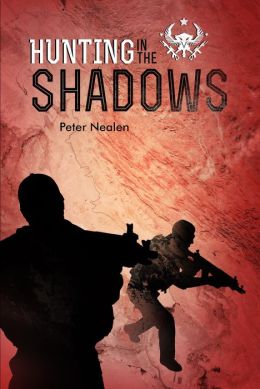
Have You seen Your Mother, Baby, Hunting in the Shadows?


Sorry, but the title makes me want to modify and sing Rolling Stones lyrics. Like a good Patient Zero, I have spread this virus as far as I could, in hopes that it's contagious enough that others will be afflicted with this compulsion.

Peter Nealen is a former Recon Marine and a recently-debuted author of military fiction, starting with his Task Force Desperate, and now followed up by Hunting in the Shadows, about a private military company operating after the economic collapse in our near future.

In the paramilitary adventures being published now (including my own), I can't think of any protagonists I'd be comfortable calling "mercenaries," though technically that is what they are. Money is a secondary motive for these "soldiers of fortune." Bringing some semblance of justice to a given situation is the primary driving force, and there are interests they won't fight for (or take money from). Today we have the option of calling mercs "contractors" or "PMCs," thus outflanking the stigma associated with that dreaded M-word. So be it.


If there's anything that even remotely resembles a plot device in Nealen's military fiction, it is what Pentagon brass refer to as "mission creep." His novels unfold the same way unconventional warfare does. The mission parameters in effect yesterday may not be what you're guided by today. The roster on your side and the enemy's side keeps changing as guys die, just as in "normal" warfare, but nothing else is constant, either. Those who thrive in this kind of existence adapt quickly and often, constantly considering various contingencies, variables and caveats. We know this because, as in Task Force Desperate, the tale is told in first person--so we are right there inside Jeff's head as he navigates more dangerous turf and an intricate, complex (if not convoluted) political/military minefield in the Middle East.

Jeff is a Team Leader in Praetorian Security now. The shooters waxed in the last mission have been replaced, and Praetorian is on a headhunting crusade this time--taking out known terrorist leaders during a near-future conflict involving Iraqis, Kurds, Iranians...and a rogue's gallery of terror organizations (some of which you've heard of, others maybe not).

Nealen has ramped up the action from his debut novel, and it seems like Jeff and his buddies are a bit more comfortable with their roles in the chaotic new world they're wading through. And just as in his first book, the author knows enough to get the military/paramilitary details right without bogging the reader down in the minutia. Little phrases or sentences here and there triggered my muscle memory, like how you have to rock in and tilt back on the magazine of an M14/M1A (a superb MBR, in my opinion) to lock it in the well. And in one of the firefights he depicts...this is weird, but true...my ears deadened and rang as I read it, remembering how small explosions sound like a dull thud after experiencing a bunch of large ones in quick succession. That's some savvy, zeroed-in prose right there.

For the last couple years the Clancy-esque millitary thrillers and techno-thrillers have acquired some competition in the form of a "second wave" of military fiction. In the Second Wave, authors (many of them veterans of Iraq and/or Afghanistan) are combining adrenalin-pumping action with a degree of authenticy sadly lacking in much of the First Wave. I'm glad to have been involved in this renaissance and I recommend Hunting in the Shadows as a fine representative of it.

Tuesday, May 14, 2013

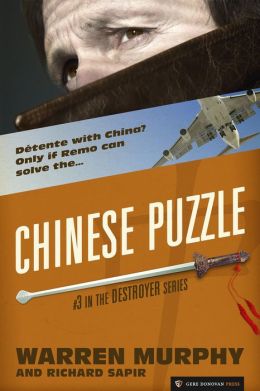
Destroyer #3: Chinese Puzzle by Warren Murphy and Richard Sapir

icon icon

I never saw the big screen adaptation of the Destroyer. From what I've heard, that's no big loss. In any event, I'm a late arrival to this action-comedy series by Warren Murphy and Richard Sapir. But after reading just this one installment, I understand why the series is so popular.

The plot is rife with Cold War intrigue, with a few twists to keep you guessing. It concerns a kidnapped general from the People's Army, and his attractive concubine. Remo and Chiu are dispatched to resolve this international incident.

Remo Williams is a regular guy. No, make that an exceptional guy. He's an old-school adventurer who happens to be learning a deadly martial art from a wizened master. Chiu isn't just exceptional--he's pretty much superhuman. We get some background on him in this book, concerning his native village in Korea, and the art he has mastered. He's also a hilarious smartass, who kept me snickering periodically.

There is an affection between these two heroes--that of a teacher for his gifted student, and the student for his incomparable master. And yet, we learn Chiu is prepared to kill Remo if ordered to by those they work for. Lucky for both Remo and the reader, this doesn't happen.

So whether you like action or humor, but especially if you like both, this book gets a strong recommendation from me.


Wednesday, March 27, 2013

Cogar's Despair by Nate Granzow


As a rule, I try to avoid novels with a reporter protagonist. This is perhaps hypocritical, since my own entry in the Fight Card series, Tomato Can Comeback, is narrated by a reporter. In any case, Grant Cogar is well worth an exception to this rule.

Cogar's Despair is a fast-moving, fun read with some brilliantly developed characters and a plot that is far from predictable. And while it may be fun for the reader, the story is not always fun for Cogar--who is brought to the very brink of, um, despair a couple times. His misfortunes come via a combination of an impulsive nature, friends entangled in some dangerous shenanigans, some terrible (but humorous) luck, and bad guys who are flat-out bad, and proud of it.

I mentioned characters. Where Granzow really nailed it for me is in his hero, Grant Cogar. I like the guy. You will, too. You can't help it. He's somebody we can relate to, yet somebody who winds up taking heroic action when the going gets tough...without trying to be heroic. I'm tempted to compare him with Richard Sharpe from Bernard Cornwell's renowned series, because he's a man of action. But he doesn't necessarily want to be. He's not a super-stud or somebody who aspires to be one...it's more like he's just a loyal friend whose bad luck gives him a break now and then.

And there's a romantic element involving an Australian ice queen. It is handled in a believable fashion which added to the tension, kept me turning pages and, in the end, left me satisfied. In pulling this off, Granzow avoided the cliche`s and formulaic plot devices I've come to dread.

If there is a weakness in this novel, it's isolated to a portion of dialog toward the end between Cogar and his boss which is a bit too on-the-nose for my taste...the skinflint editor grudgingly admitting what an all-around great guy our hero is. It's a hard plot resolution to pull off without grating on me, I'll admit, but I would have liked something more subtle.

In short, folks, this is a very good read. I recommend it with no reservations, and look forward to the forthcoming Cogar's Revolt. If that one flows like this one did, I'll probably become a fan. Check out Nate's website (named after his other novel, which I now must add to my TBR stack) The Scorpion's Nest.


Friday, March 15, 2013

Jim Morris and Hank Brown Discuss Classic Men's Adventure Spoof "Breeder"

For anyone who loves to read, I’ve got a great story for you. Have you ever owned a book that you enjoyed so much, you read it all over again every few years? Have you ever wished you could meet the author and have a conversation with them about that book? Well, folks, that happened for me.

Most people discover Jim Morris’ writing through his most well-known book, the autobiographical War Story. Some come to his prose by way of The Devil’s Secret Name or Fighting Men, from watching Operation Dumbo Drop (based on one of his stories) or from reading some of his magazine articles. I was introduced to his work via a men’s adventure novel which was a breed apart (pun intended) from any military fiction I’d read before. Jim and I discuss what makes it unique below, but I should mention up front that he is a boombastic writer. His prose in this novel especially appeals to me because the style is so much like the way I think and speak and joke around. However it happened, he really locked in on my wavelength.

Breeder has just been re-released in both paperback and e-book formats, and the literary landscape is more picturesque now because of that, so far as I’m concerned. So here’s our dialog:
 
HANK: First of all, Jim, thanks very much for taking the time to discuss this with me. For me, Breeder is one of those books I dust off every few years when I want to escape for a while and recapture the fun I had the first time around. Should a Fahrenheit 451 scenario unfold and jackbooted thought cops came to burn up all my dangerous literature, they'd have to kill me before I let them torch that book. Re-reading it is like catching up with an old friend and snickering together at some of our familiar "in" jokes.

JIM: I had started Breeder in Oklahoma, and when (editor Mike) Seidman took Sheriff of Purgatory, which had been published in a shorter hardback version by Doubleday I figured he'd buy Breeder, so I finished it. They paid me $3500 for it, and if they ever got any fan mail they never forwarded it to me. I was always proud of it, but I had no idea anybody else ever got what I was doing with it. Your review was the first and only reaction I ever got from anybody about it. I have no idea how many books were sold, because I never got any royalties, and nobody ever told me. When I asked Cindy (Manning) to do the cover she told me she liked it a lot, but she never had mentioned it before. I didn't even know she'd read it. Same with my son Crews. When I told him it was coming out again he told me he liked it too, and liked that it was dedicated to him and his brother. So I'm liking this new way of doing business. There may or may not be as many sales, but God knows the royalties are better, and writers have a much more personal relationship with their readers, which makes me really happy.
Back cover--Breeder
HANK: I’ve never been traditionally published, but I suspect this new author-reader dynamic is far superior as well. Also, I’ve never been quoted for a back cover blurb on a paperback, as far as I know. So it’s a double honor that I’m quoted thusly on the latest edition of Breeder. And the fact that I get to grill the author of one of my favorite books is just too friggin’ awesome for words.
This is a little embarrassing: I remembered a story one of your characters (Lady Strange) told the hero about her father, but I forgot where I "heard" it in between readings. I figured it must have been one of my ex-girlfriends, but couldn't figure out which one. (Of all the things I've lost, it's my mind I miss the most. But that gives you an idea how much a part of my long-term memory this book became.)
I'll start with the generic question: What inspired Breeder? Where did it come from or what made you want to write it?

JIM: I read a piece in a newspaper Sunday Supplement section, oh, sometime about 1977. It was about a lab experiment which was basically the Breeder experiment. They bred sterile super-rats and those rats killed off the regular rats and took over their females. There was one breeder super-rat, and their fear was that it would escape the laboratory. I thought that would be a perfect setup for a satire about the exaggerated heroes in men’s fiction. It took a few years before I actually got around to writing it though. The first draft was titled SuperRat. Mike Seidman, my editor at TOR, convinced me that this title would not be a draw.

 HANK: I could second-guess that decision. “SuperRat” hints at the humor and outlandish nature of the novel, and might have drawn Harry Harrison fans thinking it was a spin-off of his Stainless Steel Rat—only to find out it was something even better…IMHO.

This book actually hit the shelves at the twilight of traditionally published men's adventure fiction. I didn't know the genre was being phased out at the time--being stationed at Bragg since the mid '80s there'd never been a shortage of the genre in the Fayetteville bookstores and I just took it for granted that it would always be available. In fact, a lot of that fiction had begun to grate on me. The invincible super-stud with the porn star endowment who could charm any nubile wench into the sack and then spring up post-coitus firing a 20mm cannon from the hip while espousing some sophomoric worldview to make Freud smirk...that had grown stale, striking me as too much like the grandiose self-image of some of the alcoholic Neanderthals I served with. So the way you poked fun at the conventions of the genre was one aspect of Breeder's appeal to me. And yet it was such a subtle spoof that plenty of readers would take it at face value.

I remember a college acquaintance once praising the "genius" of the Batman TV show in the 1960s, because the campy humor flew right over the heads of the kids who watched the show, but it slapped the adults in the face...letting both demographics enjoy it on a level where they were comfortable. While Breeder never approaches that ridiculous flavor of parody, you did walk a tightrope of sorts, crafting a narrative with appeal for both an audience that "gets it," and an audience that assumes this is just Ramsay Thorne's Renegade on steroids with some speculative fiction and social satire thrown in. I'd like to hear why you made that choice.

JIM: Basically I made it for fun. The kind of stuff I read as a kid was science-fiction, mostly. Later I graduated to a more elevated kind of men’s fiction. I was a big fan of Hemingway, James Jones, Vance Bourjaily, Joe Heller of Catch-22 fame... Then, later, in New York, I edited that kind of stuff, but also the men’s series adventure fiction. A lot of it I liked. Jerry Ahern was a good writer, and some others were terrific. My friend Hank Schlesinger wrote really good men’s fiction. But also a lot of it was the purest of crap. And I’ve never liked the formula of formula fiction. Anyway I thought it would be fun to exploit the genre and satirize it at the same time.

HANK: Somewhat related to this general topic, I guess, is the self-reflective comment on the genre early on in Breeder, made via Desmond, the hero's roommate. (How men's fiction protagonists are always uberstuds, never guys like Desmond.)

And I hadn't noticed Dale A. Dye's comment on the original cover until just now that Breeder is cliche'-free. Do you agree? Seems to me the whole point of Breeder is to highlight the cliche's of the genre, and amplify them to a nigh-ridiculous level while at it.

JIM: I’m not sure it’s still a cliché when you exaggerate it out of shape. You’d probably find English teachers who go either way on that. The idea was pretty much to laugh my ass off and keep the adrenalin up at the same time.

HANK: You were successful from where I sit. You had me snickering throughout, but certain parts made me laugh my ass off—like a scene after the recon of the local banks. Clendenning and Lady Strange are deciding which bank they want to rob first, cars they’ll have to steal for the getaway, guards they may have to kill, things that could go wrong resulting in their own deaths…stuff like that. During this discussion she glances at a bank brochure procured during their recon and remarks (and if she didn't make a tsking sound first, she should have), "My, these interest rates are just awful." I almost laughed myself into a stroke.

The way I shopped for reading material in those days went something like this: I drove to the bookstore, found the shelves with what I was in the mood for, and scanned for something that caught my eye. When something did, I'd pull it down, give the cover art the once-over, then read the back cover blurb. If the blurb intrigued me, I'd open it up and thumb through some random pages to determine if the author's style could hold my interest. Depending on my mood, if the book scored high in all criteria, I'd lay down my $3.95 for it (boy, those were the days!).

JIM: What’s neat about that to me is that, as an editor, that’s exactly how I tried to set my books up. I wanted a cover that would catch the eye from say the front door of a 7-11, or at a distance from a book rack in a store. The cover would draw you to the blurbs. The blurbs would draw you to the front matter, and the front matter would suck you into the story. You went the extra step of sampling the prose itself, which means you were an especially smart and dedicated reader. Actually I think you were the kind of reader I lived to reach, which is to say the same kind of reader I was before I got in the biz.

HANK: That is DA BOMM! I don’t think I’ve ever been so expertly baited before.

Breeder Original Cover As I mentioned earlier, I had dialed back a notch or two on my enthusiasm for men's adventure by then, so I was actually browsing the science fiction shelf when I found Breeder. It was a Tor book, with a southwestern landscape in the background of the cover art, and a firefight underway outside a small adobe village. In the foreground was a blond, bare-chested dude making out with what appears to be an Injun babe. Dominating the cover, though, was the hero brandishing an Uzi...inside a test tube.

JIM: So let’s pause a sec and give credit to Royo, the artist. He’s Spanish. I’d liked his covers I’d seen before and asked Mike to use him, which he did, and for which I’m glad. The current cover is by Cynthia Manning, the best commercial artist I’ve ever personally known, and who also has the added distinction of having been my second wife.

HANK: Now I understand how incomplete my own strategies have been. I should have married an illustrator, whose father is an ad executive/marketing genius and mother is a big wig at Amazon or something. (And then be very careful not to piss them off, of course.)

My attention so effectively caught with the cover art, I flipped it over to the back cover blurb, which read:

HE WAS A BREEDER...but he didn't know it. He only knew that America was torn by civil disobedience and strife and that his job was to help settle things down.

HE WAS A SOLDIER...Clendenning knew that, knew tactics, knew weapons. But he didn't know what he had been trained for, what he had been born for. If he had gone to the debriefing, things would have been very different. But Clendenning always did things his own way.

JIM: Another pause to give Mike Seidman credit for that copy. Mike and I had the odd distinction, at that time, of being the only action-adventure editors (I was working for DELL then) who were also veterans. Mike had been a leg MP in XVIII Airborne Corps at Bragg. We had another distinction in common. He had answered a call one morning and actually caught a rapist leaving the scene of the crime. The guy didn’t understand “Halthalthalt,” said very fast and low and so Mike blew his young ass smooth away. So he and I were the only action-adventurers who had ever actually killed somebody. Maybe that’s why he liked my stuff.

HANK: Breeder does have a rather morbid outlook, come to think of it. Maybe that’s another reason it appealed to me so much. I think it would have appealed to most of the grunts I knew at the time (those who were capable of reading/comprehending more than just a Bacardi or Everclear label, that is) as well.

After reading the blurb my eyebrows were definitely raised. So I thumbed through some random pages, and my eyes caught this phrase: "Hot rod Christian Indian Sorcerer." I probably did a double-take. I searched around and read the better part of a couple chapters right there in the store and found that one of the Geebees drove a badass Charger RT. Not one of these butt-ugly four door luxury sedans they call Chargers since the Daimler-Chrysler debacle. A REAL Charger. And another Geebee drove a hopped-up Corvette. That clinched it for me--there was no way I was leaving that store without buying the book. I'm still something of a gearhead but I was a flat-out fanatic in those days, and the only medium in which I could read about street machines was in the automotive enthusiast magazines (Hot Rod, Car Craft, etc.). For some reason, no author ever featured truly wicked machinery like that in novels. As it turned out, those cars played a very minor role in the story, but still I loved the fact that they were included at all. Was this a case of you merely fleshing out the stereotype of those you thought would constitute the corps of a Geebee movement?

JIM: Probably had to do with the fact that one of my favorite things to do in this world is to drive a beautiful, powerful car at a high rate of speed with loud stupid music in the background. I have very little mechanical knowledge, but, oh baby, I know what I like.

HANK (channeling the Big Bopper): Shantilly Lace, she had a purty face…

Now that’s what I’m talkin’ ‘bout. Beautiful, powerful cars ripping up the road in an orgy of high-octane mayhem—that’s freedom, baby!

There were several elements in Breeder that I knew something about. Aside from ROTC and the Rangers, you didn’t go into much detail on many of them, but what details you did include were spot-on (taking into account that this was speculative fiction, of course)—a piece of jargon or some other little nuance here or there—and I really appreciated that. The film makers behind the Fast and the Furious franchise are so blatantly ignorant about the subject matter of their movies that I refer to all their celluloid abominations as “The Lame and the Ludicrous.” Big respect to you as an author because, unlike those Hollywood hacks, you limited yourself to what you could present credibly.

The new cover looks cool. The infant brandishing the AK47 inside the test tube is great. But I still like the original cover, too.


JIM: All credit to Cindy on that. Like I said, she’s the best. But I did write the new cover copy.

HANK: Anyway, in the back cover blurb of the re-release, you now make it clear from the beginning that the breeder's entire upbringing was a charade with your Potemkin Village comment.

The first time I read it, you hadn't made it so slap-in-the-face obvious up front. I remember the first major clue for me was in Chapter One when Clendenning read his own article the paper, in which he opined that college football should be played between different schools instead of between frat houses. Hmm. Then he ambushes a sorority queen who is "glowing" and she utters narry a protest as he ravages her. Double hmm. (I must have forgotten the title of the book I was reading, and the blurb, and was anxious to get to the Charger RT.) Then when Clendenning kills his ROTC instructor in front of a class full of witnesses and there are absolutely no repercussions I did another double-take. I was active-duty enlisted and at the time had never been to college or involved in ROTC at all. Even so, I was fairly confident that this sort of thing just did not happen.

JIM: I wrote those first chapters when I was still in Oklahoma. Later, in the University of Arkansas writing program I put that stuff up for evaluation by the writer’s workshop. I did that with satirical intent too, because some of the people in the workshop were soooo politically correct that I knew the rape scene would give them the leaping fantods, especially one jerk who had no sense of irony whatsoever, and who wrote the most boring prose I’ve ever seen in print. It worked too. He went into high dudgeon mode and called me awful names. Oh, it was so distressing!

Jim Whitehead, who taught the workshop, had to point out that the rape was stylized, and obviously written with satirical intent. But I loved to watch that fool froth at the mouth and flail about.

HANK: One of many reasons I never shared this book with any of my friends in college. Besides, according to your protagonist he didn't commit rapes--they were just "extremely rapid seductions."

I had all sorts of theories swimming around about who was behind Jeff Clendenning’s carefully choreographed childhood, and why they went to such incredible lengths to infiltrate the US Defense forces with Manchurian Officer Candidates who were unaware of their true mission. For some reason I was leaning toward a malevolent extra-terrestrial entity (ironic, considering Jeff’s “Alpha Centauri” comment and your flirtation with the idea of re-writing Breeder that way), so when you revealed the Soviet Union as the culprit, it kinda surprised me. I mean, you almost spelled it out with that Ruskie professor and his experiment with rats, but still I wasn’t quite ready for it. Many readers might have seen it coming, but I still wonder about your choice to reveal more of your cards this time than with the first printing.

JIM: I never really thought of it as a secret. I just needed some cover copy so I ripped it out, and that came with it.

HANK: Maybe it’s an unfair comparison, but I can’t help thinking of Terminator II: Judgment Day. The way the film was put together, the audience had every reason to believe Schwarzenegger was sent to kill John Connor after his cyborg twin failed in the first movie, while the liquid metal Terminator was sent to protect the boy. It would have been a big surprise when Arnie says, “Come wit me if you vant to liff!” Then you realize the roles are reversed. But because of the theatrical trailers, the surprise was blown and everybody knew the deal from before they bought the popcorn. But I digress. Please continue.

JIM: My original intent was to make the controllers the space people out there, something like the Silver Surfer in uniform. In that first scene when Jeff is going for his morning run he was running under two moons. But Mike (Seidman) was the guy who bought it, and his area was not pure sci-fi, but adventure thrillers. He said for him to publish the book it had to be earthbound, so we made the villains the usual suspects for the day, the bad, bad USSR. Since who the bad guys were wasn’t the main point of the book I went with it.

HANK: One of your principle characters is fascinating, to say the least: Brother Fletcher, the Soul Mechanic. He’s a Choctaw/Cheyenne medicine man who’s also a stoner, gearhead, and revolutionary. After first meeting Jeff Clendenning (your protagonist), Brother Fletcher goes into a long diatribe on philosophy and religion, explaining his “Church of Is.” During the ride into town he lets on that he knows Jeff is AWOL (and disguised with his girlfriend’s wig while wearing her cutoff shorts, thong sandals and a Waylon Jennings T-shirt–an obscene get-up for an action hero if I’ve ever pictured one). Then as Jeff adjusts the disguise while getting out of the car, he asks how he looks.

“Like a muscular faggot,” Fletcher replies.

First of all, you slayed me with that line. I laughed so hard I almost blew snot bubbles. But aside from the humorous aspect (for me, anyway), with that scene you expertly nailed the character for the reader. No more introduction is necessary. He’s larger-than-life; flawed; eccentric; opinionated…and also endowed with a degree of legitimate clairvoyance.

Tell me about this character: is he based on a real person? Is he purely symbolic? Had you already begun researching Native American mysticism when you wrote him?

JIM: Well, I’m from Oklahoma, and I’ve met a few guys with some of Brother Fletcher’s characteristics. He’s not that great a jump from people I actually know. “The Church of Is” comes from a joke that I heard from my friend Zoltan Malocsay, that I won’t attempt to reproduce here. Also, I was getting into Castaneda at the time, and was fascinated with Indian medicine. Still am.

HANK: I’ve met guys who remind me of him in some ways—usually Vietnam vets who were curious about how the newfangled Army worked, but mostly wanted to share their own experience and philosophy.

There’s another character who is unforgettable, and who also inspired me into some self-education. When I first read this character’s name, “Littlejohn the Conqueroo,” I wondered what the author was smoking. Ironically, I was already a blues fan and had listened to Muddy Waters’ early stuff a lot; but I didn’t make the connection until I heard Steppenwolf’s cover of “Hoochie Coochie Man.” At that point I went on a researching spree (which was a bit more difficult then because the Internet was unknown outside a select circle of computer geeks) and I learned about “High John the Conqueror Root” as well as its miniature version, “Little John.” I wound up educating myself on hoodoo in general, including the medicine favored by hoodoo practitioners, partially because of what you named this character.

So why did you give him that name?

JIM: “Goin’ Back down (to) the candy sto’, bring back the second cousin, Little John the Conqueroo.” –Bo Diddley from “I’m a Man.”

(Note from former aspiring blues aficionado Hank “Cain’t Dance Worf a Damn” Brown: “I’m a Man” was a thinly-veiled rip-off of Muddy Waters’ “Hoochie-Coochie Man.” Muddy got his revenge by blatantly ripping off “I’m a Man” with his “Mannish Boy Blues.” Then a generation later George Thorogood’s “Bad to the Bone” was a thinly-veiled send-up of all of them. But any of the above testosterone-dripping tunes are highly appropriate soundtrack fodder for the sort of men’s fiction lampooned in Breeder.)

BTW, dig how Bo Diddley uses tactical radio procedure to clarify that “main” actually means “man”…

“I spell: M-A-N.”

Well, I guess he should have spelled it Mike-Alpha-November if he was going all the way, huh?

JIM: Gotta tell you: Bo Diddley was the first guy I ever thought was cool. I used to know a Blues drummer here in LA named Fou-Fou, a nickname he picked up in a Belgian whorehouse in the army. I was at Fou’s one day, and the conversation came around to Bo Diddley and I was telling him what I just wrote here. While I was telling him that he fiddled with his phone and then held it out and said, “Tell him yourself,” and I talked to Bo Diddley for a half hour.

So basically what I did (with Littlejohn the Conqueroo) was invent Mister T before he did. When that character came out in The A Team I cracked up. I dreamed you, Mister T.

HANK: I remember thinking one time as I read it: No way! This guy is like Mr. T!
“I don’t hate Jim Morris; I pity the fool! But I welcome the chance to haunt his dreams some mo’!”

But wait… My paperback bears a print date of 1988. Rocky III and The A-Team (starring Mr. T) were early 1980s. When was the book actually written?

JIM: That part was written maybe in 1977-78. Same with the helicopters playing Led Zeppelin’s “Communication Breakdown” during the attack. At least I think I left that in. I wrote it before Coppola used “Flight of the Valkyries” in Apocalypse Now, but the book came out after. But I used it anyway, because I thought of it first.

HANK: Hoowah! In your FACE, Coppola and Millius!

Ahem. In your near-future scenario, you had all branches of the US Military combined into the “US Defense Forces.” The uniform was black stretch-jumpsuits and nobody was referred to by rank, only by pay-grade. Talk a little about that choice, if you would.

JIM: Well, I’m old enough to remember when the Air Force became a separate branch, and the Departments of War and Navy were merged into the DOD. There was talk, at that time, of merging the forces, sort of like the way the Canadians and the Israelis do it. That and the habit in the army of people referring to others by their pay grade seemed like something it would be fun to satirize.

HANK: In 1993 and ’94 I met some real-life Geebees. They didn’t call themselves Geebees, maybe because CB radios didn’t play as big a role in their network as in your book, good buddy. And I didn’t meet the “doper” persuasion much–mostly the 2nd Amendment advocates (“gun nuts” to use 0-8 Percival Custer’s term). But I had many conversations with these people, broke bread with them, saw some of them train (I even wrote a character into my last novel, Tier Zero, lifted out of this counterculture­­­­­­)…and as I was introduced to their world I remember thinking to myself: “Jim Morris was some kind of prophet!” Not just about the Geebees, about a whole lot of things, but especially that.

In your book a second Civil War was underway. There were a lot of folks who feared that would become a reality in the mid ’90s. (It’s an even bigger fear right now, BTW.) Please tell me about the Geebees, Civil War II, and how you depicted them in Breeder.

JIM: Well, of course I’d had some contacts with the precursors of the militia movement. Edited Jerry Ahern’s The Survivalist, written for Bob Brown’s Survive magazine, and edited EAGLE magazine, and Harris Pub’s gun magazines. So I had a fair amount of experience with guys with military training who were frothing at the mouth at the way things were. Seemed like something a smart dedicated enemy could exploit to make us destroy ourselves without them having to get dirty.

HANK: Just wait, folks, until you read about the Jewish chapter of this quasi-fictional resistance movement.

If I lived in California, Jim, I’d consider it a privilege to buy you lunch and your fill of beers while we had this discussion face-to-face, with a recording device. But since that is not possible, I’ll stop with the questions now. I very much appreciate your willingness to humor me with this back-and-forth. And I want to thank you for writing Breeder. It’s probably obvious by now that I’m a big fan of this novel. Such a huge fan that I searched for years for other fiction by you, with no success until recently. I’ve read and reviewed your autobiography War Story and your serious war novel Above and Beyond. I have Silvernail on my Kindle already, and you can bet I will eventually find time to read Spurlock: Sheriff of Purgatory. Everything I’ve read from you has been good, and left a mark on me in some way or another.

Getting to finally meet you and converse about fiction, film, Special Forces…and everything else we’ve discussed…has been truly a joy. Thank-you very much.

JIM: You have to realize that everything I’ve done since I was six years old was to work myself into a situation where someone would say something like that to me. Thanks.

HANK: Jim now has his own website you should visit: www.jimmorriswarstory.com. Some great articles and other info there!


Wednesday, January 30, 2013

It's a Wrap!

WARNING: By viewing this post, you agree to hold blameless the Two-Fisted Blogger for any increased levels of testosterone, additional chest hair growth and irresistablility to shapely nubile fly girls.


Yes, unfortunately, the Men's Adventure Blog Tour has come to an end. Now what're we gonna do? Well, for starters, read the rest of this post!

In the days before social networks, a lot of us were routinely spammed by friends and relatives with email jokes, anecdotes, questionaires and smarmy stories. One of the best ones I ever received was called "The Writing Assignment." Because it meshes so nicely with some of my guest blogs during the tour (and because it's so doggone hysterical) I tracked it down and pasted it below:

PROFESSOR MILLER: Today we will experiment with a new form called the tandem story. The process is simple. Each person will pair off with the person sitting to his or her immediate right. One of you will then write the first paragraph of a short story. The partner will read the first paragraph and then add another paragraph to the story. The first person will then add a third paragraph, and so on back and forth. Remember to reread what has been written each time in order to keep the story coherent. The story is over when both agree a conclusion has been reached. Ready? Begin.

REBECCA: At first, Laurie couldn't decide which kind of tea she wanted. The camomile, which used to be her favorite for lazy evenings at home, now reminded her too much of Carl, who once said, in happier times, that he liked camomile. But she felt she must now, at all costs, keep her mind off Carl. His possessiveness was suffocating, and if she thought about him too much her asthma started acting up again. So camomile was out of the question. 

GARY: Meanwhile, Advance Sergeant Carl Harris, leader of the attack squadron now in orbit over Skylon 4, had more important things to think about than the neuroses of an air-headed bimbo named Laurie with whom he had spent one sweaty night over a year ago. "A.S. Harris to Geostation 17," he said into his transgalactic communicator. "Polar orbit established. No sign of resistance so far..." But before he could sign off a bluish particle beam flashed out of nowhere and blasted a hole through his ship's cargo bay. The jolt from the direct hit sent him flying out of his seat and across the cockpit.

REBECCA: He bumped his head and died almost immediately, but not before he felt one last pang of regret for psychically brutalizing the one woman who had ever had feelings for him. Soon afterwards, Earth stopped its pointless hostilities towards the peaceful farmers of Skylon 4. "Congress Passes Law Permanently Abolishing War and Space Travel," Laurie read in her newspaper one morning. The news simultaneously excited her and bored her. She stared out the window, dreaming of her youth — when the days had passed unhurriedly and carefree, with no newspapers to read, no television to distract her from her sense of innocent wonder at all the beautiful things around her. "Why must one lose one's innocence to become a woman?" she pondered wistfully.

 GARY: Little did she know, but she had less than 10 seconds to live. Thousands of miles above the city, the Anu'udrian mothership launched the first of its lithium fusion missiles. The dim-witted wimpy peaceniks who pushed the Unilateral Aerospace Disarmament Treaty through Congress had left Earth a defenseless target for the hostile alien empires who were determined to destroy the human race. Within two hours after the passage of the treaty the Anu'udrian ships were on course for Earth, carrying enough firepower to pulverize the entire planet. With no one to stop them they swiftly initiated their diabolical plan. The lithium fusion missile entered the atmosphere unimpeded. The President, in his top-secret mobile submarine headquarters on the ocean floor off the coast of Guam, felt the inconceivably massive explosion which vaporized Laurie and 85 million other Americans. The President slammed his fist on the conference table. "We can't allow this! I'm going to veto that treaty! Let's blow 'em out of the sky!" 

REBECCA: This is absurd. I refuse to continue this mockery of literature. My writing partner is a violent, chauvinistic, semi-literate adolescent. 

 GARY: Yeah? Well, you're a self-centered tedious neurotic whose attempts at writing are the literary equivalent of Valium. 

REBECCA: You total prick! 

GARY: Stupid bitch!


Hey, don't blame me for what Gary and Melvin say...even if it turns out they are fans of the Two-Fisted Blog.

Well, I hope all who followed the first ever Men's Adventure Blog Tour enjoyed it. Thanks to all who participated, and that includes my fellow authors/bloggers James Reasoner; Wayne Dundee; Nate Granzow; Peter Nealen; Paul Bishop; Jack Badelaire; Dan Tharp; R.A. Mathis; Sean McLachlan; Winston Crutchfield; Jack Murphy; Mel Odom; and Jack Silkstone.

Some of you have also given Tier Zero reviews on Amazon, and I'm especially grateful for that. (John Scott and Jim Morris are not bloggers, but I don't want to leave you out--boocoup thanks for taking the time to read and post reviews!) Same goes for those who plugged the novel on Twitter, Facebook, and elsewhere: thanks very, very much. And thanks to all who clicked "like" on the Amazon page.

So here comes February and it's back to blogging for me. I believe there are some major changes coming in 2013 and those might include the Two-Fisted Blog. I have some ideas I want to implement--I just need a little help with them. The changes will be obvious if/when they occur.

Until next time, folks. 

Monday, January 14, 2013

Men's Adventure Online Event of the Century!


Say hello to my little friends...

icon icon


BAM!

To celebrate the launch of my new novel, Tier Zero, the Men's Adventure Blog Tour starts now!


Remember the unapologetic literary mayhem from the glory days of men's adventure paperbacks in the 1980s? Well, those days are back, only better, and we're going to celebrate that for the next two weeks. You are invited to the online traveling party.


We're gonna tour the World Wide Web, stopping at the very coolest blogs for guys who like books for guys. Through these blog stops, you're probably gonna discover some great reads by authors you haven't yet been introduced to. As a bonus, while surfing the blogs you just might find the lowdown on that movie you were wondering about, videogames, guns, military gear or other cool guy stuff. You never know with a motley assortment of miscreants like the bloggers in my network.


But back to the reason for this epic explosion of virtual testosterone:

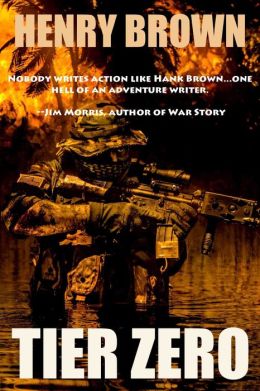
Tier Zero is a present-day throwback to all that was good about the men's fiction of yesteryear, and a sequel to the military thriller Hell and Gone which Jack Silkstone (PRIMAL) calls "a man's book, through and through." In this guns-blazing sequel, Tommy Scarred Wolf leads the survivors from Hell and Gone on a rescue mission that pits them against human traffickers, pirates, a typhoon...and that's just for starters.


Each stop of the blog tour takes the participants to the online stomping ground of a fellow blogger who welcomes men's fiction/action-adventure/dude lit/whatever ya wanna call it. The tour runs from January14-30.


THE TOUR SCHEDULE


January 14: The Two-Fisted Blog (You are here!)

January 15: American Praetorians

January 16: Rough Edges

January 17: Reflexive Fire


January 18: Bish's Beat

January 19: R.A. Mathis

January 20: Post Modern Pulps


January 21: From Dundee's Desk

January 22: PRIMAL

January 23: Critical Press Media

January 24: Adventures in Writing

January 25: Civil War Horror


January 27: Sharp End of the Spear

January 28: Hot Extract

January 29: Nate Granzow


January 30: Wrap-up right back here on the Two-Fisted Blog!


I'll see you on the next tour stop!