Search This Blog

Wednesday, December 26, 2012

Boxing Tales For Boxing Day


So far as I know, Boxing Day is a British Commonwealth holiday in which people trade occupations for a day. At least that's what I learned from a rerun of M.A.S.H. one night long ago when I was bored enough to watch it. And I don't think it has anything to do with the sport of boxing.

But what the heck. It seemed like a good excuse for a promotion of the Fight Card series. So from December 26 to January 1 ALL the Fight Card books will be available for 99 cents on Amazon. That's an opportunity to enjoy a lot of hard-boiled noiresque pulpy sports fiction for the cost of a proportionate binge on 40-ounce Arizona iced teas.

All the Fight Card authors, myself included, publish under the house name "Jack Tunney." But here's some extra incentive to buy mine: If you buy Tomato Can Comeback, then next time I play Fight Night Round Three, I'll name a character after you and beat the living crud out of him.

What's that, you say? You'd rather have your namesake beat the living crud out of me? Well, that can be arranged. Post an Amazon review and I guarantee your alter ego will emerge triumphant. I'll even adjust the outcome of the fight based on your ranking. One star and you'll barely eke out a decision win and fans will forever question your skills. Five stars and you'll destroy me in a devastating knockout that confirms your cyber machismo to the videogame world.

Is that an amazing deal, or what?


Tuesday, December 25, 2012

Men's Adventure Cameos


Crossovers are nothing new, but with the recent nostalgia for old-school action-adventure, spurred along by the Expendables movies (with a 25-year high school reunion flavor to them), it seems there was never a better time for team-ups between heavy-hitting icons.

The latest Mack Bolan novel, State of War, features a sort of team-up that is more along the lines of one of Alfred Hitchcock's cameos in his own films. Bolan is joined, not by another famous paperback action hero, but by author Jack Murphy (PROMIS; Reflexive Fire; Target Deck). I find this especially cool because I know a little about Jack...like how he's been a Mack Bolan fan since he was a kid. Don Pendleton's character made Jack an enthusiast of the genre, and ultimately led to him becoming an author himself. His Deckard character is not a pastiche or knockoff of Bolan, but he is a sort of literary offspring. Anyway, Jack Murphy has now been fictionalized, and assists Mack Bolan in his war against evil. I haven't read it yet, but just had to buy the book, knowing this. I'm sure I'll read and review at some point.

This got me thinking. (Dangerous; I know.) Wouldn't it also be cool if, among the circle of military fiction authors publishing right now, we had some fun with crossovers in some of our own books? Not cameos of authors, necessarily, but of our characters. I read somewhere that Bolan and the the Death Merchant knew of each other, therefore existed in the same "universe." I don't know if they ever had a crossover or even cameos in each other's adventures, outside of fan fiction. If they didn't...they should have!

This could be our own little "in joke," shared by those savvy enough to follow the Two-Fisted Blog, of course. It wouldn't have to be a ha-ha funny joke, or a detour into self-parody a la` The Expendables II. Just something kind of fun, that would bring smiles to our faces, while paying tribute/respect to the creations of our fellow, contemporary, action-adventure authors.

What do y'all think?


Saturday, December 15, 2012

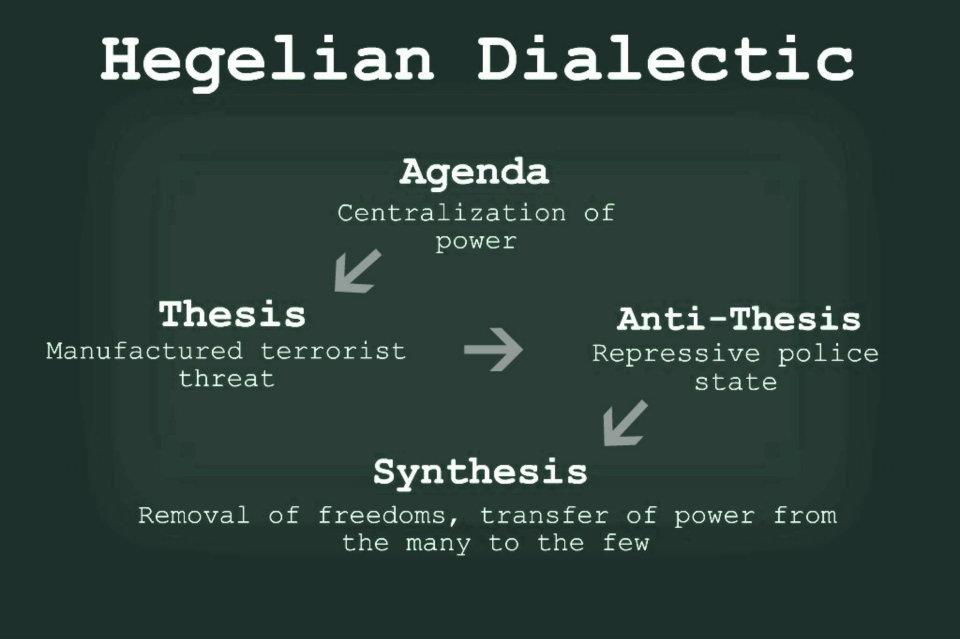
Hegel Rides Again: Enemies Foreign and Domestic by Matthew Bracken


In the wake of the latest media blitz, capitalizing on the school shooting in Connecticut, I figured it was as good a time as any to review the first book in a trilogy written by Matthew Bracken. Bracken, a former Navy SEAL, is someone who believes in the 2nd Amendment, and his trilogy fictionalizes the federal government's war against individual rights.

It probably won't be long before somebody labels this book prophetic. And in some ways it is. Not that the author is clairvoyant--he just has paid enough attention to history and current events to notice the patterns and extrapolate from there.

Bracken has put some well-drafted characters into the mix. What mix? Some of tomorrow's headlines, and the real stories behind them. Tomorrow, that is, if you refuse to believe that the sort of false-flag operations he depicts are already happening.

As a work of fiction, what's refreshing to see is that the characters make sloppy mistakes and bad decisions that real people do...and usually pay for it. But even when they are smart and extremely careful, Big Brother can still track them down and bring the pain. Yet there are other characters who make mistakes (like the sniper that got cut around the eye by his scope) and don't wind up paying for them. Plausible.

Ranya Bardiwell is easily the smartest "good guy" in the book. The Lebanese-American beauty has had no formal military training as have most of the other citizens forced into conflict with their government, yet she accomplishes some impressive feats and makes very few mistakes along the way.

Brad Fallon is a likeable guy who just wants to live free and mind his own business. He has worked hard and saved to fix up a boat he plans to sail away from the police state our country is becoming. But fate and the evil ambitions of fascist control freaks (who happen to be just incrementally smarter than Eric Holder) will soon drive Brad, Ranya and some other law-abiding citizens together, hunted down as enemies of the State.

My only "problems" with this novel come down to matters of opinion:

First, the Mini-14 is called a "crummy rifle." I wholeheartedly disagree. True, it is not as accurate as the M16A2 and later AR variants. But it is far more dependable over time (and in any environment) than the AR15 family, speaking from personal experience.

More importantly, Bracken portrays our national descent into socialist police-statehood as orchestrated by over-zealous ATF nazis, while the individuals at the highest levels of government are hapless dupes, innocent of the false flag black ops making their own agenda a reality. That strikes me as a naive worldview, made necessary by the presumption that conspiracy is impossible. (After all, conspiracy theory is a hate-filled, farfetched, cockamamie fabrication of the vast right-wing conspiracy, ain't it?)

Compare press coverage of Fast & Furious with press coverage of this school shooting that just took place. The former has been swept under the rug, while the latter will continue to be hyped at least until the next atrocity. Fast & Furious, at last count, was responsible for roughly ten times the murders of those comitted at the school shooting. One reason for the glaring double standard is that Holder's "Justice Department" was caught red-handed committing a false flag operation. The crisis was revealed as a fabrication, and so it went to waste. This conveniently timed atrocity against children in Connecticut has not been revealed as a fabrication. This crisis will not go to waste. Though small potatoes compared to the murders perpetrated by Attorney General Eric Holder, this story will continue to be rammed into the consciousness of the culture relentlessly.

 
If you don't recognize the pattern, or the agenda, there's no use in trying to explain it to you, anyway.

This is a well-written book, but there's too much truth in it for an intelligent reader to be comfortable cuddling up with it. Escapism, it is not.

Oh yeah--what kept me from reading Bracken's books for so long was the exorbitant price. Electronic versions were priced around $10; paperbacks double that, or more. I obtained this E-book as a result of a free giveaway, or I might never have read it. But I'm happy to report that the prices have been reduced to a much more competitive level. This one was $4.99 and Castigo Cay was $6.99 last I checked. Still a bit steep for E-books, but not ridiculous, either.


Saturday, December 8, 2012

SOLDIER OF FORTUNE, WITNESS OF FATE...


Yesterday was the anniversary of the attack on Pearl Harbor. I haven't read or watched any fresh material on the subject in quite some time, which is why I didn't blog about it. But that event was a turning point in history I doubt many people today appreciate.

The war with Japan was a catalyst which led to a change in warfare, and the world as a whole. Even after the Cold War ended, the paradigm shift has not yet been overturned. The major players on the global scene are still pushing their own agendas via proxy wars, when necessary. So I'm featuring a book written by someone who was there in the midst of some of those proxy wars: The Devil's Secret Name, now available as an e-book.

I've reviewed some of Morris's other books here on the Two-Fisted Blog before and, long story short, they are all good reads that just might educate you a bit if you're not careful.

A highly decorated Green Beret commander and acclaimed military writer, Jim Morris spent his post-Vietnam years as a journalist on assignment in the world’s most dangerous battle zones. Armed only with a reporter’s eye and a soldier’s heart, he covered the Third World conflicts that served to forge a post-Cold War world, shaping both lasting peace and sowing the seeds of global terrorism. An embedded journalist, years before the term was coined, he bore witness to the fierce realities and uncertain outcomes of guerrilla warfare.

From the jungles of Southeast Asia to the shattered peace of the Middle East and the violent twilight world of El Salvador, here are the frontline dispatches of a veteran reporter and seasoned solider. Inevitably the only reporter on the scene, Morris chronicles more than combat shrouded in the fog of war. Living among the soldiers, his remarkable battlefield reports capture the extraordinary courage, unwavering faith, and the dark humor common to all combat troops.

ABOUT THE AUTHOR

Jim Morris served three tours with Special Forces (The Green Berets) in Vietnam. The second and third were cut short by serious wounds. He retired of wounds as a major. He has maintained his interest in the mountain peoples of Vietnam with whom he fought, and has been, for many years, a refugee and civil rights activist on their behalf.

His Vietnam memoir War Story won the first Bernal Diaz Award for military non-fiction. Morris is author of the story from which the film Operation Dumbo Drop was made, and has produced numerous documentary television episodes about the Vietnam War. He is author of three books of non-fiction and four novels. He has appeared on MSNBC as a commentator on Special Operations.

Monday, December 3, 2012

Gunfight: Union Yellow-Legs vs. KKK Night Riders!

icon
icon

Amazon has reduced the cost of my post-Civil War e-novella, Radical Times, to 99 cents. What better time to promote it, sez I. I've made sure it's available for the same price at Barnes & Noble for the Nook, at Kobo, Smashwords, Sony, Apple, Diesel and everywhere else.

It's tempting to categorize Radical Times as a western, and it does feature horses, six-guns and shootouts, but it takes place east of the Mississippi. Pick Garver is a soldier who survives the horrors of the War Between the States, but might not survive the smoldering hatred during Reconstruction. A native Arkansan, Pick was raised on his slave-owning uncle's plantation, but ran away North to fight with the Union Army. His "treason" is not appreciated by the white population of his hometown, but a desire to see two women overcame his better judgment. One was his dying mother; the other is the woman he loves but probably can never be with.

Wanna take a peek?

The invaders wore hoods made from flour sacks, pillowcases and various other material. Most were cloaked with sheets or blankets, though one of them wore a Confederate Army jacket. Pistols still smoking in their white hands, they fanned out to cover the crowd.
“Make way!” shouted a muffled voice.
The crowd parted, leaving an open path up the aisle to the front.
“What’s goin’ on?” one man asked the masked intruders. A pistol fired and he went down.
“Any more stupid questions?” asked the masked figure who had shot him.
“The time for you niggers to gloat is over,” declared another muffled voice. “By order of the Knights of the Ku Klux Klan. You niggers up there in front, come here.”
Huddy, Josiah and Lutrell exchanged fearful looks, then stepped down and walked toward the masked men.
“That means you, too, Shealy!”
Randy Shealy blanched, but stepped down and overtook the others.
When the group of leaders had reached the back of the church, Shealy approached one of the masked men. “Just what is the meaning of this?” he asked, in a quavering voice. “Who are you and what right do you have—“
The masked man slammed his pistol into the side of Shealy’s face. The preacher went down. “You’re a disgrace to the white race,” the masked man said. He kicked the prone, unconscious body. Then, seemingly enjoying the sensation of his boot sinking into Shealy’s stomach, kicked him again and again.
Pick went from shocked, to scared, to furious as the scene unfolded. His single-action Colt had five cylinders loaded, the hammer resting on an empty chamber, but none of his compatriots seemed to be armed at all. Slaves were forbidden to bear arms, so few freed men even owned weapons yet, much less were in the habit of traveling with one.
“Rush them!” Pick cried, unholstering his gun. “There’s only a few of them; we’ve got them outnumbered.”
They could have overpowered the murderous visitors with minimal casualties, but the crowd was sluggish to act.
“Who said that?” demanded one of the intruders.
Another fired toward the sound of Pick’s voice, hitting someone in between them.
Pick, unable to get a clear shot through the crowd, ran to the aisle. With a hooded target now in unobstructed sight, Pick took aim and fired. The man was slammed to the floor.
Men scrambled to get farther out of the line of fire. The hooded intruders poured hasty shots in Pick’s direction. Pick dropped to his belly and fired again, winging one masked man in the arm. A hundred voices shouted all at once.
The masked men grabbed the leaders—two of them carried Randy Shealy—and backed toward the door. As the last one backed out with his captive, pistol still waving at the occupants of the church, Simon Lutrell tore free and dove to the ground. The masked man cursed and fired into the room, then the door was slammed shut.
Amidst all the yelling and cursing, there were noises outside now: thudding, scuffing, scraping, even hammering. Then there was a crash. A flaming bale of cotton came crashing through one of the only two windows, landing on one of the church pews and blossoming into a powerful blaze.
Panicked men charged for the door, trampling friends and neighbors in the process. But the door was solidly barricaded, and smoke seeped in around it. Pick tried to assess the situation without getting trampled himself.
Pick decided the windows were the best way to escape, but they were rather high…and now they were being boarded up from outside with preassembled planking. Smoke thickened rapidly in the building from all sides. The whole structure had been set afire from outside.
He tried to quiet the mob, but at the top of his lungs could not be heard above the din. He moved toward the window nearest him. Others nearer the windows had the same thought and got there first. Men jumped up and hung from the window ledges by one hand, but had little leverage to force the boards out with the other hand. If they would only cooperate with each other, one man could stand on the shoulders of two and push against the barricade. But nobody was being cooperative.
 The church grew hotter and smokier. Pick yelled and mimed directions to no avail. They were all going to suffocate and burn here because nobody would work together and focus on a practical plan.


This scene was lifted from the middle of the story.

This is from an Amazon review:

A group of Union soldiers returning home after Appomattox has one last battle to fight and the author does a wonderful job in this tightly written novella of drawing characters and moving plot forward.

This novella has everything - a nice exposition that doesn't get bogged down, wonderful character development, a bit of romance, a touch of sex followed by intense, well-thought out action before returning to a poignant touching ending that distilled the consequences of American history into the lives of two lovers.

That's right, Two-Fisted Bloggees: Yours truly tried his hand at a romantic subplot--just to give you a warm, squishy feeling before the final bloodbath.

Dang. From the "Customers Who Bought This Item Also Bought" list, it's obvious most of the sales have come from romance fans. Where are the lovers of blood and guts action? Does this mean I should shift my efforts from action-adventure to mushy bodice-rippers? Oh, the irony!

 Here's another Amazon review...I assume from one of those romance readers:

Informative, exciting, romance. All good. But I didn't like the ending so I'm hoping there will be a book 2?????

 Next time don't be so long-winded, lady! (Just kidding--I really appreciate reviews of any length.)

Well, pilgrim, it so happens the idea of a sequel has occurred to me, so I'll make a deal: if sales shoot through the roof and I get a respectable number of reviews and likes (let's say, um...40), I'll do it.

Whaddya mean, ya don't like the ending?!?!?

Actually, I think I know. But I won't divulge because it would be a spoiler. So nyah-nyah.

Meanwhile, I'm off to buy a bodice so I can practice ripping it.

(P.S: Radical Times is also included in my adventure anthology Virtual Pulp, which is available in paperback as well as e-book formats. What a friggin' bargain!)

Tuesday, November 27, 2012

The Infantry, the Infantry, With the Dirt Behind the Ears...

You'll never stop the infantry in a hundred million years...

icon
icon


At any given time, I'm in the process of reading 5-20 different books.

Simultaneously.

Now granted, some of them may take years to finish; some of them months; some of them weeks (the ones I need to write reviews for are priority). Well, here's one of them. I bought House to House by David Bellavia for my Kindle a while back, for no particular reason other than I was curious about conventional combat in Gulf War II and this memoir about the battle for Fallujah seemed like it might enlighten me. (Obviously I bought it when I wasn't swamped, like now.)

It sat on my cyber-shelf for quite a while, collecting dust, but then I began working on the sequel to Hell and Gone. The sequel has some house-clearing action, and my own limited MOUT (Military Operations in Urban Terrain) experience is probably as outdated as the technology... and, well, heck, everything else my creaky old civilian self remembers. Now where can I find some reference material on this subject? Why, right here in my Kindle! Sha-zam!

Just in case I've fooled some of you into thinking I have half a brain, let me confess that I began my military service as an E-1 in the Airborne Infantry. I volunteered for it. In fact, once my ASVAB results came back, the recruiter told me I could choose any MOS the Army had--you know, all those nifty ones in the commercials that have plenty of overlap into civilian occupations.

Nope. Not me. I wanted a dead-end slot in the one MOS with absolutely no civilian application: Grunt.

Strip away all the extra alphanumeric characters from my MOS and what I am is an old 11B. Eleven-Bush. Eleven-Bulletstopper. I was trained to get there by parachute, but once I got there, I was a ground-pounder. Line doggie. Light infantry, baby. Hoo-wah! Woof, woof! Ui, ui, ui, aaaaah-uhhhrrrrr! We like it, we love it, we want more of it, blood makes the grass grow greener!

Ahem. Yeah, okay, I was stupid. If I had the youth and health (and inclination) to join the military today, I guarantee I'd do everything different.

But ya know what? I'm kinda' proud I did what I did, too. And so, while reading the prologue of Bellavia's book, he struck a chord with me. He was a leg, and mech, at that; but I couldn't help but feel some cross-generational solidarity with him when I read this:

Dust cakes our faces, invades our sinuses, and stings our eyes. The heat bakes the moisture from us with utter relentlessness. Our body temperatures hover at a hundred and three. Our ears ring. On the edge of heat exhaustion, we get dizzy as our stomachs heave. 

We have the spastic shits, with stabs of pain as our guts liquefy thanks to the menagerie of local bacteria. Inside our base's filthy outhouses, swarms of flies crawl over us. Without ventilation, those outhouses are furnaces, pungent with the acrid smell of well-cooked urine.
All this, and we get shot at, too.
Welcome to the infantry. This is our day, our job. It sucks, and we hate it, but we endure for two reasons. First, there is nobility and purpose in our lives. We are America's warrior class. We protect; we avenge. Second, every moment in the infantry is a test. If we measure up to the worst days, such as this one, it proves we stand a breed apart from all other men.
Where we work, there are no cubicles. There are no break rooms. Ties are foreign objects; we commute in armored fighting vehicles.
Our workplace is not some sterile office or humming factory. It is a stretch of desolate highway in a vast and empty land. A guard tower burns in the background. Shattered bodies litter the ground around us. Vacant corpse eyes, bulging and horror-struck, stare back at us.

The stench of burned flesh is thick in our nostrils. This was once an Iraqi Civil Defense Corps (ICDC) checkpoint, designed to regulate traffic in and out of Muqdadiyah, one of the key cities in the Diyala Province. Thanks to a surprise attack launched earlier in the morning, it is nothing more than a funeral pyre. We arrived too late to help, and our earnest but untrained allies died horribly as the insurgents swept over them. One Iraqi soldier took a direct hit from a rocket-propelled grenade (RPG). All that's left of him are his boots and soggy piles of bloody meat splattered around the guard tower.
This is our workplace. We began to acclimate to such horrors right after arriving in the country. 

While on our second patrol in Iraq, a civilian candy truck tried to merge with a column of our armored vehicles, only to get run over and squashed. The occupants were smashed beyond recognition. Our first sight of death was a man and his wife both ripped open and dismembered, their intestines strewn across shattered boxes of candy bars. The entire platoon hadn't eaten for twenty-four hours. We stopped, and as we stood guard around the wreckage, we grew increasingly hungry. Finally, I stole a few nibbles from one of the cleaner candy bars. Others wiped away the gore and fuel from the wrappers and joined me. 

As for the rest of the book, I'll see how it shapes up. And for all you other grunts who might find this blog post, young and old, Army or Marines, Airborne or Air-Assault, straight leg or mechanized, Gulf War II, Gulf War I, Panama, Grenada, Vietnam, Korea...and everything in between, I salute you as a brother.

You can take a man out of the infantry, but it's hard to take the infantry out of the man.


Friday, November 23, 2012

Red Dawn...Revisited


It's pretty amazing a movie like this was made even once, and if there was ever a flick I was sure would never be remade, Red Dawn was it.

John Millius wasn't trying to make a political statement with the first one. He was basically reliving childhood games he used to play in the woods with other kids, based loosely on the WWII resistance depictions they'd seen on film, and a "what if" concept of a Russian invasion of the continental US in the future.
  Statement or no, the content was offensive to the film elite, and Hollywood never forgave Millius for making it, despite good box office and a subsequent bonanza in video rentals.

This time around it's not the Cubans, but the North Koreans, assisting the Russians in the invasion. That's right: Russians again, not the Red Chinese, as previously reported (though perhaps that would have made more sense). And this time the Wolverines are not in Colorado but Spokane, Washington.

As much as I like John Millius's work (director of Conan the Barbarian, Flight of the Intruder, The Wind and the Lion, The Rough Riders, plus screenwriter for Dirty Harry, Magnum Force, Apocalypse Now, Extreme Prejudice, Dillinger, Farewell to the King...), the original Red Dawn had plenty of room for improvement.

I'm pleased to report that probable one-time director Dan Bradley, and his writers, did improve on the original--particularly when it comes to acting and dialog. No groans or rolling of the eyes for me this time around due to those aspects. And there was an attempt to update the plot/increase the plausibility, which I believe was mostly successful. The first few minutes of exposition via news clips, however, I found to be fairly lame, and probably not even necessary.

Long story short, major US population centers are blacked out by non-nuclear EMP (electro-magnetic pulse) weapons, followed by a ground invasion, including an airborne component. Don't ask me why vertical envelopment would be necessary for Spokane, Washington. Maybe nearby Fairchild AFB... I suspect this plot element was retained simply as homage to the original, and perhaps also to The Longest Day, which obviously influenced Millius, as well.

I was going to insert a clip here from TLD, from the scene of the St. Mere Eglise jump--specifically a shot of a US paratrooper firing his Thompson while still under canopy on his way to the ground, duplicated in Red Dawn 2012 during the initial airborne assault. But alas, the only Youtube clip of that scene is modified to the point you can't even see that shot.

Of course, most of the familiar moments were from the Millius version: the ambush scene in which the wolverines pop out of spider holes; the deer blood drinking scene (but with a twist); and some others.

Dan Bradley didn't add a lot of character development, but what he did add was good. The writers took Robert's character on a different course, fleshed out a little more, but I'm not so sure I like it better. A nice touch was making Jed a veteran of Iraq this time, home on leave when the stuff hits the fan. With his experience, he's able to train these high school kids, including his little brother, into an effective guerrilla unit in short order. More than once he points out his role reversal--now he's on the insurgent side, interdicting on the occupiers.

Whereas the 1984 version took place in the Rockies, most of the combat here is urban. I don't want to go into a lot of detail about what was realistic and what wasn't, but I was pleased by the thinking that went into how a resistance movement could get going on a local or regional level. Lots of nice touches. As I've said before, I can pick apart pretty much any Hollywood movie or TV show on technical points, but I'll refrain here because they made an intelligent effort for the most part, while keeping the entertainment factor high throughout.

My biggest complaints about this movie can be confined to just two areas. First, it was hard to understand some of the dialog, particularly from the Josh Peck character. But honestly, some of this was due to noise in the theater, while most of it was probably due to my poor hearing. The other problem is one I won't let them off the hook so easy for: shaky-cam.

This is such an overused cinematic "technique" for action flicks these days, I guess other moviegoers must really like it or think it's cutting-edge.

It kinda pisses me off.

Saving Private Ryan used some handheld shots to nice effect (which, ironically, Steven Spielberg was inspired to use because of its effective use in John Millius's Rough Riders). But this wasn't just handheld work in RD 2012. They evidently had the cameraman overdose on caffeine, mounted him on a pogo stick and dumped a colony of ants down his underwear prior to shooting every action sequence.

I'm still glad I watched the movie. And I'm still amazed it was re-made. With the dominant ideology in Hollywood, I'd sooner expect it to be titled "Red State Dawn" and feature an invasion of diabolical Tea Party protestors, ruthlessly oppressing undocumented voters and welfare recipients. The actors and crew will probably emerge unscathed after this project. But pay attention to some of the propaganda snippets in the film--it's obvious that Dan Bradley has offended a lot of powerful interests by maintaining the spirit of the original.

As for the overall premise of Red Dawn, I'll let the words of President Lincoln hint at my opinion on the matter:

"Shall we expect some transatlantic military giant, to step over the
ocean, and crush us at a blow? Never! -- All the armies of Europe, Asia
and Africa combined, with all the treasure of the earth (our own
excepted) in their military chest; with a Bonaparte for a commander,
could not by force, take a drink from the Ohio, or make a track on the
Blue Ridge, in a trial of a Thousand years. At what point, then, is the
approach of danger to be expected? I answer, if it ever reach us, it
must spring up amongst us. It cannot come from abroad. If destruction
be our lot, we must ourselves be its author and finisher. As a nation
of freemen, we must live through all time, or die by suicide."


Thursday, November 15, 2012

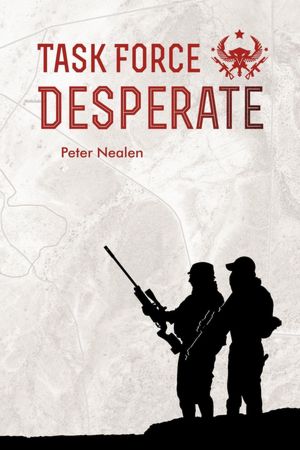
Task Force Desperate by Peter Nealen


Hello again, Two-Fisted Blogees! As you can see, I'm running late, or I would have had this review up on Veteran's Day. Oh well, most days are Veteran's Day here on the Two-Fisted Blog and at Virtual Pulp Press, anyway.

I have good news for you: I have more competition, which means we have more guns-blazing fiction to consume. I'm officially announcing the debut of two-fisted novelist Peter Nealen, who has just burst on the scene with the military thriller Task Force Desperate. Here's Nealen's pitch:

Written by a former Reconnaissance Marine and veteran of Iraq and Afghanistan, Task Force Desperate is the gritty, fast-paced beginning of a new series of military thrillers.

Jeff Stone and his team of Praetorian Security contractors are marking time on counter-piracy duty aboard a freighter in the Gulf of Aden when the boredom ends abruptly. A major US base on the Horn of Africa is overrun in a well-coordinated terrorist attack, and those base personnel who survive are taken hostage. With the world economy tanked, and most of the Western militaries dangerously thinned, the Praetorian operators find themselves to be the hostages' only hope of rescue.
The mission wasn't going to be simple, or easy. But as events in East Africa accelerate, and outside players start to show their hand, the Praetorian shooters start to realize just what a desperate gamble they are embarked upon, and what this particular job is going to cost...

One unique aspect of this novel is that it's narrated in first-person. Not much military fiction I can think of does that. Well, not any, to tell the truth. And since I've drawn attention to the writing itself already, I'll add that this is a very well-written book--way, way, way above average in this age of self-publishing. Jeff Stone (call sign: "Hillbilly"), the narrator/main character, has a voice well-suited for this sort of tale.

The good guys in this novel are mercs; the bad guys are pirates and terrorists (which can be said for my novel-in-progress, too, sort of. Here I was gloating that I'd get a modernday pirate story published before Jack Murphy does, then out of nowhere comes this Nealen dude and beats me to the punch. Ahem). Jeff is a contractor in a PMC working in the third world's hottest spot, along with some other seasoned professionals. The story takes place in the near future, after the collapse of the US dollar, and the chaos in North Africa and the Middle East is probably no worse than it is back in the US. You get the idea that the Praetorian Security shooters are orphans of a sort; men without a country. They choose to live by the sword because they like the warrior life, but also because there's nothing to go back to...nothing else left for them. It bonds them into a tightly-knit unit...almost a family. That's the impression I got.

You won't be disappointed in the action. There is tension on every page from cover to cover and it only gets higher as the plot drives on. Through no fault of the book, I had to read it piecemeal over a period of weeks, and yet I consider it a fast read. And the details were right.

When I wrote my debut novel, also a military thriller, I was shooting for the feel of the old paramilitary paperbacks, combined with believable characters, accurate details and plausible action (none of which was evident in most of those novels from the heyday of men's fiction), told at grunt's-eye-view. I had never found any such book up to that point, and believe me, I tried! Looking at the new wave of military fiction, however, this very form of hybrid I described seems to be a trend growing in popularity--possibly because so many of the new action/adventure authors are veterans. They want to make a buck just as much as the old cigar-smoking mid-list genre writers banging at their typewriters in a Manhattan efficiency apartment did, but there remains a level of pride in their former profession which compels them to sweat the details.

They want to get it right.

Pete Nealen strikes me as just such an author; and he did get it right. I recommend Task Force Desperate to everyone who likes military fiction.


Sunday, November 11, 2012

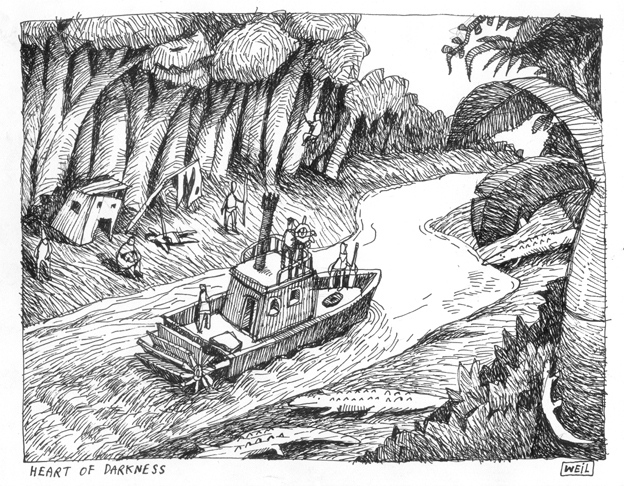
Apocalypse Then: Heart of Darkness by Joseph Conrad


Thanks to audiobooks, and a job which requires long road trips, I've been able to "read" a lot more than normal. And because of the selection, I've been "broadening my horizons" beyond the books I would normally choose. Case in point is Heart of Darkness--I've had a hardbound copy of it for over a decade, collecting dust in my "classics" section, but just never got around to reading it. When I found an audiobook version in the library, though, I figured there's no time like the present.

What intrigued me the most about this book was that I knew Apocalypse, Now was a film adaptation of it--transposed into South Vietnam circa 1969.

Believe me, I can find faults with Apocalypse, Now. Yet I still consider the original theatrical release of Coppola's film a masterpiece. I hold it up there with John Ford's The Searchers. Both are about epic journeys undertaken by disturbed antiheroes toward a showdown with not just a larger-than-life villain, but their own inner demons as well. BTW: I don't care for the Redux cut at all; as the added scenes just ruined the dark magic of the film as a whole.

So I had great expectations for Conrad's source material. It was interesting seeing how the "unsound methods" argument came about in the book, as well as Kurtz's obsession with "the horror." I also placed the Dennis Hopper character fairly easy.

In Conrad's book, the setting is not Vietnam, but the Congo during colonial days, and Kurtz was not a rogue SF commander, but an ivory supplier. Written in 1902, it very much follows the style so popular in those days. The entire plot is contained in a flashback. Conrad's vocabulary and grasp of English is deft. People, on average, were much more literate then than now (despite what you may have been taught), and it shows here.

But despite Conrad's intricate and flowery prose, the book was surprisingly short. And I hate to knock a classic, but I found the whole thing anticlimactic and lackluster. The version I checked out is supposedly unabridged, so after-the-fact editing can't really be blamed.

The problem, as I see it, has mostly to do with the Kurtz character. In the movie he is almost god-like, and the anticipation is pretty high by the time we meet him. In the book a couple characters talk him up a bit, even the narrator to an extent. But the build-up is half-assed. And Kurtz himself is dying of a disease by the time we meet him. He's supposed to be a great man; a charismatic leader who inspires fanatical devotion in his followers; and so brimming with other-worldly wisdom that mere mortals are mesmerized by his words. "You don't talk to him; you listen." And indeed, a couple characters are enamored by him this way. The natives will gladly kill or die for him, just for the privilege of remaining close to his greatness. Well, Kurtz only speaks a couple complete sentences in the whole novel, and none of his words struck me as profound or exceptional in any way. Maybe he lived up to the hype earlier in his life, but we don't meet him until he's almost dead.

I think director Francis Ford Coppola and Screenwriter John Millius were far more effective, not only at presenting Kurtz; but by selling Willard's journey to the audience as a worthwhile undertaking. They also made it easy on themselves setting the story during Vietnam, because of the drug culture. The film is like a mystical LSD trip, into which the eccentric characters from the book nicely fit. In fact, they ran with that theme, portraying some level of insanity in every scene.

As forgettable as I find the novel, I'm fascinated the film makers saw something in it in the first place. But whatever the seed of their inspiration, they nurtured it, watered it, and turned it into a towering redwood.


Saturday, October 20, 2012

The Ratbastards #4: Meat Grinder Hill

icon
icon


In an earlier post, I blogged the news about Len Levinson's march to e-book immortality. A couple of his western series have been translated to digital format on Amazon, and one of his war series. After his Sergeant paperbacks (originally released under the name Gordon Davis), his Ratbastards books top my list of guilty-pleasure war fiction.

His platoon of kill-crazy Jap-stabbing GIs now reactivated for a prolonged Pacific combat deployment, I'm still hoping Levinson cuts orders for MSGT Clarence J. Mahoney to resume his gory Kraut-killing campaign in the DTO (Digital Theater of Operations). In the meantime, I am tickled slappy that his blood-splattered prose can now grace the screen of my Kindle.

In this installment, both Master Sergeant Butsko and PFC Frankie LaBarbara are hospitalized in New Caledonia, leaving Texan Buck Sergeant Bannon in charge of the 23rd Infantry's Recon Platoon (the Ratbastards of the title).

US forces are mopping up the final resistance on Guadalcanal, and the regiment is using the Recon Platoon as a screen. In the attempt to catch up to an enemy patrol, Bannon and his platoon of cutthroats stumble right into the Japanese 17th Division, dug in on the Gifu line.

The narrative switches back-and-forth between the action on the 'Canal and the erotic adventures of LaBarbara and Butsko among the nurses on New Caledonia--two completely different plot lines, related only by the fact that these wounded Casanovas are from the Recon Platoon.

There is spectacular action...and not just with the lusty nurses. And not all the combat is against the Japanese. A cheese-eating first sergeant from one of the line companies sics his men on the Ratbastards and the gang violence that ensues is better than any rumble between Crips and Bloods, Outlaws and Hell's Angels, or Jets and Sharks. When the opposing combatants are Japanese, the bloody gore is brutal without the sick, graphic obsession of some more current fiction. And true to form, Len Levinson depicts more bayonet combat in the battle for Hill 27 than probably occurred in the entire island-hopping campaign.

I first read this long ago, in a paperback with Levinson's John Mackie pseudonym on the cover. Upon a recent perusal, it surprised me how many typos I found, and other mistakes (in the space of 3 paragraphs, 1 character's rank changes from captain to lieutenant back to captain, for instance). But it is a great read if you like over-the-top war scenes (without ALL the sickening details of what combat in the Pacific was really like).

As in all his books I've read, Levinson knows how to keep a reader turning pages, sprinkles in some nicely-researched tidbits, and litters the landscape with characters you will either abhor or admire...but always be entertained by.

Friday, October 12, 2012

SpecOps in Pre-Castro Cuba: Silvernail


Have I mentioned lately that the World Wide Web is what's up? One reason I say this is that it makes possible the interaction of bookworms like me with the authors of books they love. 

E-books and Print-on-Demand are what's up, too. Those make it possible for authors once pimp-slapped around by the New York Publishing Cartel to re-issue their backlist and make it available for a new generation of readers. I should say generations, plural, because there's no need for good books to go out of print anymore due to limited shelf space at brick-and-mortar bookstores.

Both of these phenomena (of internet-age coolness) come together in the person of Jim Morris. I've reviewed his Breeder, War Story and Above and Beyond here on the Two-Fisted Blog. With the help of Antenna Books, he is still re-releasing his earlier titles. One of the most recent to become available for the Amazon Kindle is Silvernail. Check it out:

The Green Berets' deadliest asset, he was chosen to do their most dangerous job...

The Green Berets sent Captain John Silvernail to San Sebastian to change the tide of history. His mission: to hook up with the rebel army that was whipping the pants off the U.S. backed dictator. His goal: to win its leader's confidence before Castro did.

But to get on Comachos's good side, Silvernail had to fight for him. And once the fighting had started, there was no telling where it would lead or when it would stop.

ABOUT THE AUTHOR

Jim Morris served three tours with Special Forces (The Green Berets) in Vietnam. The second and third were cut short by serious wounds. He retired of wounds as a major. He has maintained his interest in the mountain peoples of Vietnam with whom he fought, and has been, for many years, a refugee and civil rights activist on their behalf.

His Vietnam memoir War Story won the first Bernal Diaz Award for military non-fiction. Morris is author of the story from which the film Operation Dumbo Drop was made, and has produced numerous documentary television episodes about the Vietnam War. He is author of three books of non-fiction and four novels. He has appeared on MSNBC as a commentator on Special Operations.


Saturday, October 6, 2012

Time and Again by Jack Finney


This post I'm giving you a brief respite from all the blood and thunder, to review a time-travel adventure written in the early 1970s.

Simon "Si" Morely is recruited by a super-secret government agency for a top secret project. He is asked to volunteer, though the recruiter won't even tell him what the project is about until he signs on the dotted line. It wouldn't be much of a story if Si did the logical thing and told them to take a long walk on a short pier, so he signs on and gradually learns the project involves experiments in time travel.

Si is the ideal candidate because he is both fairly intelligent, and artistic, which gives him the right sort of cognitive profile for the job.

Like Somewhere in Time, the movie starring Christopher Reeve, the method of time-wrinkling here is hypnosis. So I don't know if that makes it more or less science fiction than plots (improperly) invoking Einstein's relativity theory as a method of time travel.

If you're prone to mentally debating yourself on theoretical matters, as I am, then the hypnotic time travel premise can instigate quite an intellectual quandry for you. Who can define time? I dare you to try, in one coherent, easily understood sentence. It's the 4th dimension we exist in. We can't affect it, influence it, ignore it or define it. We can only measure it. And if it weren't for the law of entropy, it wouldn't be a big deal anyway.

But I digress.

Si travels back to the New York of 1882. His assignment is to observe a man mail a letter (a letter his antique-collecting girlfriend showed him). When he succeeds in his mission and returns, the project is delighted, and tasks him to return and do more of the same. As he does so, Si stumbles on a blackmail plot involving a man who would become a president's advisor.

This mystery becomes the centerpiece of the novel, though Finney gives us a glimpse into a lost, forgotten era with snippets of the early Industrial Revolution urban milleu. Si also develops feelings for a young woman he meets during his time travels ("young" being relative, of course). At one point, he brings her back to his time and it's fun, if not comical, to view the "modern" world through her eyes.

Finney's politics were absent until toward the end of the book, and very understated by today's standards.

In short, Time and Again provides the reader with a nice mellow escape for a while. And if I ever find the right venue, I might even try hypnotizing myself back to a bygone era. If I can take my laptop, I might never come back.