Search This Blog

Friday, October 12, 2012

SpecOps in Pre-Castro Cuba: Silvernail


Have I mentioned lately that the World Wide Web is what's up? One reason I say this is that it makes possible the interaction of bookworms like me with the authors of books they love. 

E-books and Print-on-Demand are what's up, too. Those make it possible for authors once pimp-slapped around by the New York Publishing Cartel to re-issue their backlist and make it available for a new generation of readers. I should say generations, plural, because there's no need for good books to go out of print anymore due to limited shelf space at brick-and-mortar bookstores.

Both of these phenomena (of internet-age coolness) come together in the person of Jim Morris. I've reviewed his Breeder, War Story and Above and Beyond here on the Two-Fisted Blog. With the help of Antenna Books, he is still re-releasing his earlier titles. One of the most recent to become available for the Amazon Kindle is Silvernail. Check it out:

The Green Berets' deadliest asset, he was chosen to do their most dangerous job...

The Green Berets sent Captain John Silvernail to San Sebastian to change the tide of history. His mission: to hook up with the rebel army that was whipping the pants off the U.S. backed dictator. His goal: to win its leader's confidence before Castro did.

But to get on Comachos's good side, Silvernail had to fight for him. And once the fighting had started, there was no telling where it would lead or when it would stop.

ABOUT THE AUTHOR

Jim Morris served three tours with Special Forces (The Green Berets) in Vietnam. The second and third were cut short by serious wounds. He retired of wounds as a major. He has maintained his interest in the mountain peoples of Vietnam with whom he fought, and has been, for many years, a refugee and civil rights activist on their behalf.

His Vietnam memoir War Story won the first Bernal Diaz Award for military non-fiction. Morris is author of the story from which the film Operation Dumbo Drop was made, and has produced numerous documentary television episodes about the Vietnam War. He is author of three books of non-fiction and four novels. He has appeared on MSNBC as a commentator on Special Operations.


Saturday, October 6, 2012

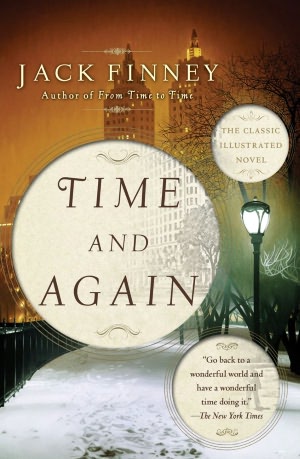
Time and Again by Jack Finney


This post I'm giving you a brief respite from all the blood and thunder, to review a time-travel adventure written in the early 1970s.

Simon "Si" Morely is recruited by a super-secret government agency for a top secret project. He is asked to volunteer, though the recruiter won't even tell him what the project is about until he signs on the dotted line. It wouldn't be much of a story if Si did the logical thing and told them to take a long walk on a short pier, so he signs on and gradually learns the project involves experiments in time travel.

Si is the ideal candidate because he is both fairly intelligent, and artistic, which gives him the right sort of cognitive profile for the job.

Like Somewhere in Time, the movie starring Christopher Reeve, the method of time-wrinkling here is hypnosis. So I don't know if that makes it more or less science fiction than plots (improperly) invoking Einstein's relativity theory as a method of time travel.

If you're prone to mentally debating yourself on theoretical matters, as I am, then the hypnotic time travel premise can instigate quite an intellectual quandry for you. Who can define time? I dare you to try, in one coherent, easily understood sentence. It's the 4th dimension we exist in. We can't affect it, influence it, ignore it or define it. We can only measure it. And if it weren't for the law of entropy, it wouldn't be a big deal anyway.

But I digress.

Si travels back to the New York of 1882. His assignment is to observe a man mail a letter (a letter his antique-collecting girlfriend showed him). When he succeeds in his mission and returns, the project is delighted, and tasks him to return and do more of the same. As he does so, Si stumbles on a blackmail plot involving a man who would become a president's advisor.

This mystery becomes the centerpiece of the novel, though Finney gives us a glimpse into a lost, forgotten era with snippets of the early Industrial Revolution urban milleu. Si also develops feelings for a young woman he meets during his time travels ("young" being relative, of course). At one point, he brings her back to his time and it's fun, if not comical, to view the "modern" world through her eyes.

Finney's politics were absent until toward the end of the book, and very understated by today's standards.

In short, Time and Again provides the reader with a nice mellow escape for a while. And if I ever find the right venue, I might even try hypnotizing myself back to a bygone era. If I can take my laptop, I might never come back.


Tuesday, September 25, 2012

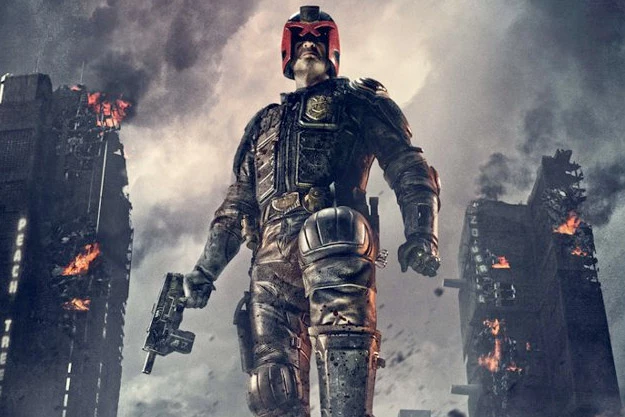
Here Come da Judge. Dredd is the Law!


Don't let the previews fool you, as I did. I had no intention of seeing this flick after watching the trailer. I didn't even plan on renting it from Redbox when the DVD comes out.

Then fate intervened.

On date night with the missus, I took her to Olive Garden, then the 9:30 showing of some artsy suspense flick. Only we had our information wrong and the artsy suspense flick wasn't until midnight. She graciously offered to watch something else, since we were already at the theater anyway. What the heck, sez I, and we buy tickets for Dredd. If it's as bad, or worse, than that lackluster Stallone vehicle from the '90s, I could simply let that pasta from Olive Garden work on my eyelids and snooze the ten buck ticket price away.

I did no snoozing.

I've been hearing remarks that this flick is a knock-off of The Raid. I've never seen The Raid so I can't weigh in on that. What I can say is that Dredd is much more faithful to the comic book source material than I expected. Certainly more than the forgettable Sly action-comedy.

For those not familiar with Judge Dredd, he was the title character of a British comic book from the '80s, about law enforcement in a post-nuke America. (Well, maybe the comic is still being produced...all I know is I haven't seen the comics for quite a while.) In the recovery from a thermonuclear war, The entire eastern seaboard of the erstwhile USA has become one gigantic urban sprawl called Megacity One. You got that right--all the rural areas between cities and towns has been filled in with asphalt, concrete and glass, from the Big Apple to Miami. It is an autonomous city-state, with a streamlined justice system. Dredd is basically Dirty Harry in this post-apocalyptic world; officially empowered as judge, jury and executioner. And he rides the mac-daddy of all motorcycles.

There is also a Megacity Two on the west coast of North America, with a ruined wasteland ("the Cursed Earth") in between. (That's pretty much how New Yorkers and Los Angelites view things already, come to think of it.) In an issue of my collection, it is revealed there's an eastern Megacity also, with neo-Soviet judges maintaining order on their streets.

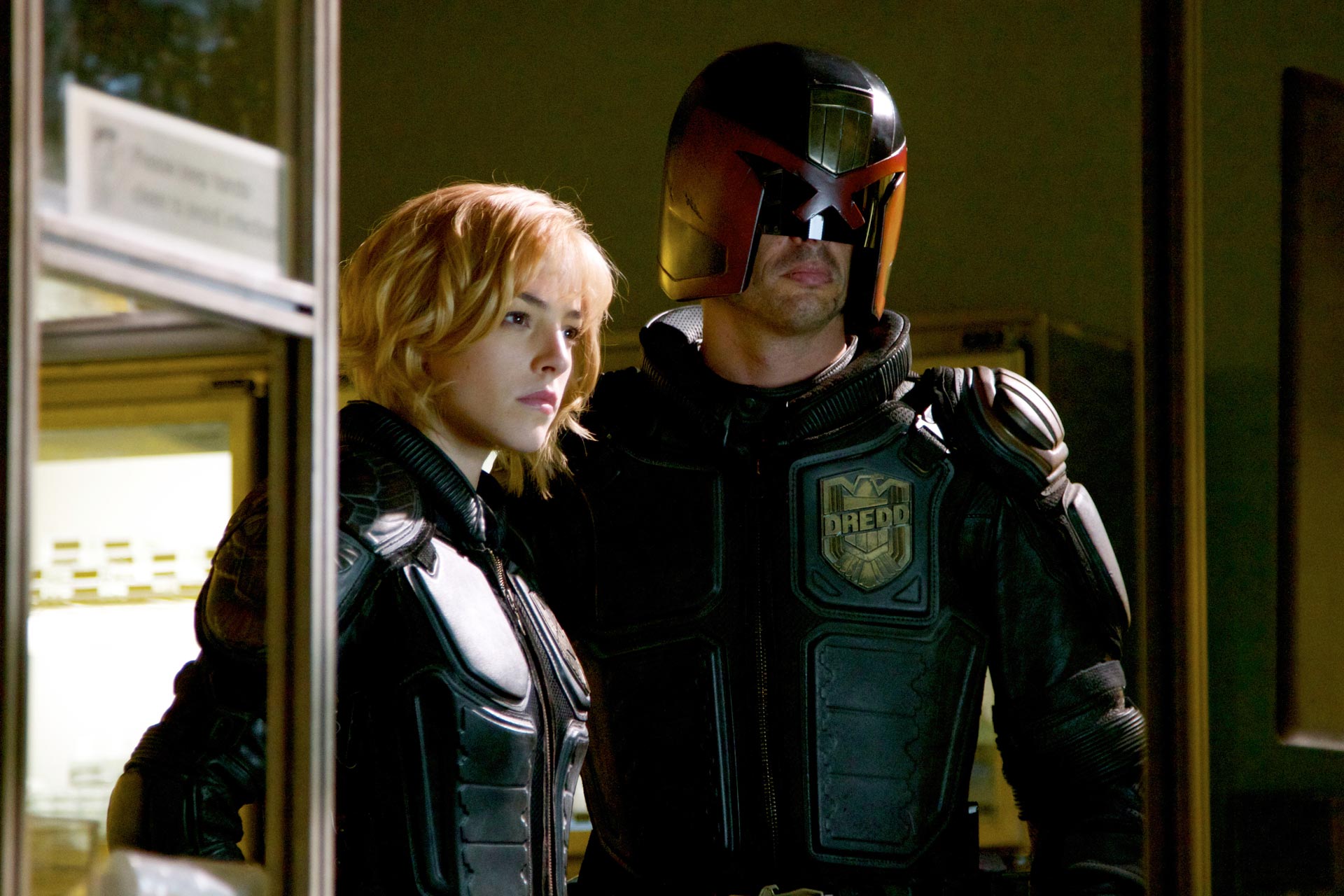
In this movie, Dredd is assigned a rookie whose test scores are just below passing, to assess her potential as a judge. We soon discover she's an empath, too, and her mind-reading skills make her a beast of an interrogator.

The bulk of the film takes place inside a fortress/tower/slum, where Judges Dredd and Anderson are locked in with an army of cutthroat gang-banging scum, hell-bent on killing them. The action is just about non-stop, and the bloody gore is simply Dreddful. (Sorry; couldn't resist.)

This wasn't the result of some beancounting suits commissioning another buddy-cop action comedy dressed up with props and costumes inspired by the comic. The film makers, this time, seemed to know and appreciate the source material.


So many visuals looked to me like they were lifted directly from the pages of the comic--especially the close-ups of Dredd himself. Megacity One didn't quite look like Megacity One in the comics, as I remember them, and the judges' bikes weren't quite as impressive, but they got so much else right, there was eye candy everywhere (no, I'm not talking about the blonde rookie, you pervs).


The most important aspect they got right this time was the Judge Dredd character himself. I applaud them for not going with a big star who would be taking his helmet off every 30 seconds to mug for the camera, and would insist on some stupid subplot or dialog revisions (ruinations) to show his soft, gooey inner teddy-bear soul. I applaud them for writing the dialog as they did. I applaud them for not soapboxing about the Occupy Movement, global warming or the need for taxpayer-funded prophylactics.

I applaud them for respecting the source material and still putting together a great popcorn-muncher that all action junkies should go and see.

Thursday, September 20, 2012

Fight Card: Counterpunch--More Than Just a Punny Title


This book is more than just a pun-derful title. It's darn clever plotting, too.

Organized crime had its filthy mitts all over professional boxing in the 1950s and, appropriately, it plays a major part in this tightly written retro-pulp novella.

Characters will make or break a work of fiction, and author Wayne Dundee ("Jack Tunney") scored a decisive win with the Duke, here. He's tough, brave, streetwise and yet a good joe to his very core. To paint it in crude brush strokes, he is similar to a Louis L'Amour western hero, only in a gritty postwar urban setting.

I have great appreciation for the classic pulps, and admiration for the pulp writers. But frankly, those guys were meeting deadlines and worried about bills most of the time; so even some of their great works weren't as carefully polished as this novella. And yet Counterpunch maintains a vintage pulp fiction flavor from cover to cover.

All the Fight Card books are great reads, and this one is exemplary.


The second issue of Fight Fictioneers is hot off the press, too. There are interviews and articles about fight fiction, including some by us Fight Card authors. If you'd like a free copy, let me know.

Saturday, September 15, 2012

A Night at the Fights


I don't watch sports that much anymore. I blog about them even less. For the last two seasons the only football game I watched from start to finish was the Superbowl. Boxing and UFC? I just don't sacrifice the time like I used to. But yesterday I was invited to a fight card at the A La Carte Event Pavillion in Tampa...and it proved too good an offer to turn down.

I knew nothing about any of the fighters on the card--partly because I haven't followed boxing for so long; partly because none of them were "name" fighters. Most were fairly new to the sport, though there were a couple veterans who just never climbed very far up the rankings.

But the matches were real crowd-pleasers. Out of 11 bouts, only three went the distance. The 12-round main event was one of those three. As you can expect with so many stoppages inside scheduled four and six-round fights, the action was thrilling.


My biggest complaint was my seat--though closer than I've ever been as a spectator, I was facing the corner post, which blocked my view frequently. I missed no less than three knockdowns because of that stupid post. And though the bouts were being recorded for Telemundo (which means that most of the announcing was done in Spanish and I couldn't make out the fighters' records or weigh-in numbers), there were no big-screens present, hence no instant replays.

Because I knew his manager, I paid close attention to Charlie Serrano's featherweight match against Juan Cruz. And videorecorded the first round on my phone. Despite being one of the three that went the distance, this was a real donnybrook. Holy life-imitates-art, Batman! I find it hard to describe what I saw without sounding like I'm plagiarizing from my Fight Card novella, Tomato Can Comeback. I'll just say that Serrano was a superb fighter--great speed, power, footwork and aggression. If Cruz hadn't been so incredibly tough (probably too tough for his own good), he would have gone down for the count. And Cruz was a southpaw, which confounds most conventional-stance boxers--but Serrano had no problem with him (other than Cruz's head made of solid chromium steel, that is).


At least the judges seemed to be on the up-and-up, as every decision went to the pug who truly won.

Another pleasant surprise for me was heavyweight Jason Barnett, who scored a blood-splattered TKO. I was impressed by his poise. He demonstrated a solid defense, some adroit counterpunching and good power. His left hooks ripped his opponent's face into raw meat and the doctor had to stop the fight. What stank to me, though, was that three times in a row the doctor waited until after the bell rang for the round to start before he examined Terrance "Big Jim" Marba, and Barnett had to wait in a neutral corner while the seconds ticked by. Like somebody had made a deal with the doc to buy Marba some time--time for his head to clear and his legs to solidify; time stolen from Barnett, who could have used it to finish his man sooner. Maybe nothing crooked was going on, but I'd have been pissed if I was Barnett.


Then there was Rad Kalajdzic, a light-heavyweight from St. Pete. Again, I've never heard of him, but he's got quite a following around the Tampa/St. Pete area, evidently. Trust me when I say most of the people in attendance came to see him, and not the main event between flyweights Glen Donaire and Omar Soto.

Here's something I don't understand: tickets are not cheap, and the place was supposedly sold out. But probably a quarter of the seats were never occupied, and a third of them only sporadically. A good portion of the crowd missed some great action because they were getting in and out of their seats for drinks (conspiring with the cursed corner post in further obscuring my view), or standing around hobnobbing, or engaging in screaming matches with other spectators. Why did they even bother coming? They obviously weren't boxing fans.


Well, when Rad Kalajdzic stepped inside the ropes, people finally took their seats to watch, and roared to raise the roof. Lucky for them they paid such close attention.

Shannon Anderson, a Phillidelphia fighter, pounced on Kalajdzic at the opening bell and swarmed him with combinations from every angle. He either wanted to blitz him with a flash-knockdown, or firmly establish who was going to dominate this fight. For a few moments it looked like Rad might be in serious trouble. He wasn't hurt, yet, but he looked dumbstruck--not offering much of a defense and unable to mount any offense, either.

But Rad weathered the storm and overcame the shock of that furious attack, soon revealing why he was so popular. At 1:36 of the first round he scored the only true knockout (not a TKO) of the night. It happened too fast (plus there was the verdammt corner post in my way) for me to see what actually put Anderson down, but he absolutely crumpled, hitting the canvas face-first in a contorted twist, actually unconscious while counted out.

Not that I need inspiration for any more projects right now, but I got plenty last night. I was already playing with the idea for another Fight Card book. Hmm. We'll see what happens.

Wednesday, September 12, 2012

Who Rescued Who? A Brief Review of "Safe"


This movie reminds me of Mercury Rising--a decade-old suspense thriller staring another bald-headed action star. In it, the good guy has to protect an autistic boy who is a savant with patterns, puzzles and codes. The boy inadvertently figures out an encrypted message and the chase is on. I remember it being a good flick, with a really intense scene which takes place in a crowded elevator.

Replace the autistic boy with a girl genius. Replace Bruce Willis with Jason Statham. Add a 3-way power struggle between the Russian mob, the Chinese mob and a corrupt police force. Season with some extra thumping time for Statham, and there's Safe in a nutshell.

Mei has a photographic memory, and is better than a computer when it comes to crunching numbers, which is why the Chinese mob kidnaps her. Seems they need to figure out a safe combination in the Big Apple. As if the mob's manipulation of her and threats against her weren't enough to put you in her corner, she's also savvy, tough and streetwise--in addition to being an adorable little girl.

Statham was a tough, clean cop--ostracized because he wouldn't play ball with his crooked co-workers. He gets it from all sides. After his wife is murdered, he has little to live for and is contemplating suicide when fate brings Mei (trying to escape the bad guys) across his path.

A snap decision is made and he is now her protector. What ensues is a white-knuckle thrill ride that left me feeling good about the time invested to watch it.

By comparing it to Mercury Rising  I didn't intend to imply Safe was formulaic. I'm sure the limp-wristed fa-hiiiiiiilmmmm critics have deemed it to be. But it wasn't such a worn-out formula that it annoyed me. To the contrary: I would like to watch it again, with some popcorn.

'Til next time, 2-Fisted Blogees!

Friday, August 31, 2012

War Story by Jim Morris

"Ever since Robin Moore wrote that book, we'd been green-bereting up a storm." --Jim Morris, War Story


Vietnam.

Just the mention of that geographic term is enough to spark controversy among  people my age and older. Pretty much every adult I knew growing up had some sort of strong emotion attached to it. My teachers had protested the American deployment there; my parents had feared it; and once in a while I ran into someone who had been directly involved in it.

I think most people would agree the whole mess we call Vietnam was tragic (though my teachers/professors undoubtedly believed it had a happy ending since the Communists conquered the South and Vietnam has joined the number of Socialist dictatorships that American jobs are being outsourced to).

American veterans of the conflict certainly suffered, whether from combat wounds, Agent Orange, being spit on when they returned home and called baby-killers. But nobody suffered as much as the natives of Vietnam. I mean the Vietnamese, of course; but also the Montagnards and Nungs.

Jim Morris was in-country from early on, before the first conventional troops were deployed, until after the Tet Offensive (more on that later). As an officer in Special Forces, he bounced around quite a bit in South Vietnam, able to put both the forest and the trees of that conflict into a perspective that  your average lowly grunt (or a REMF in Saigon, for that matter) could not--at least without years of investigative journalism afterwards, I'd bet.


From Lyndon Johnson on down, the prosecution of the Vietnam War was a confusing, convoluted, self-defeating debacle. But no more confusing or convoluted than politics, or life in general, for the people of Vietnam. In this autobiographical work, we get just enough of a snapshot of the situation over there to appreciate just how complex it was.

More than anything, though, War Story is about a man whose chief aspiration in life was to be a soldier. While other young men were dragged to Vietnam kicking and screaming, or dodged the draft altogether, Jim Morris and other members of the Special Forces volunteered for Vietnam. Against his wishes, Morris was assigned jobs either in the rear or on Okinawa--jobs other men would have killed for. Still, he clawed and scratched his way back to the periphery of the conflict. Sometimes right into the hot thick of it--you can be certain that, unlike some who've attempted to parlay their service into political success, Morris earned his Purple Hearts. In fact, Morris actually feared promotion beyond 0-3 (Captain), because it would nix his chances to command an A-Team.

In the author's own words: "I do not recall a moment in my life when I was not bored, before I got to Vietnam; very few since leaving there. Going to Nam was like trying on my first pair of glasses. Before the glasses I didn't know that other people could see clearly. Before going to Nam I didn't know that everyone wasn't paralyzed by boredom all the time. I suppose that in any well-ordered society people like us would be locked up or shot. But then you would have to get people like us to do the locking up and shooting."


Had there been more officers like this in my time, I might have held to my original plan of being a 30-Year-Man. Or at least 20. Morris was a soldier who cared about the mission, and wanted to make a difference, armed with ideas which could have done so. He worked within the system, but (and this is one thing I love about SF) wasn't obsessed with following counterproductive protocols, or eating cheese. He wanted to fight, and to win, while the average career officer just wants to kiss ass, shuffle paperwork, and admire rows of spit-shined boots and starched uniforms all perfectly dress-right-dressed.

But not only was victory not an objective for the US chain-of-command, the South Vietnamese weren't much interested in it, either. The ARVN (Army of the Republic of Vietnam) was infamous for its corruption and incompetence. It would be hard to name a military organization more rife with cowards, crooks, traitors and fools. Whatever good soldiers fought for the South were buried under bureaucratic BS.

Morris relates the story of how some loyal villagers reported six VC (Viet Cong) sighted in a certain ARVN officer's district. "Only one weapon between them." That ARVN commander could have captured them quickly and easily, possibly getting some valuable intelligence into the bargain. Instead, he sent the report up his ponderous chain of command. Three days after the VC left the village, an airstrike leveled it. That's how loyalty was rewarded. Any wonder why most of the Vietnamese citizens turned a blind eye to VC activity?

"All intelligence in Vietnam flowed up, and none flowed down to the people who could use it. But the maps in Saigon were gorgeous."

At one point, Morris compared two of the strategic maps available for MACV brass. One map showed the areas of VC/NVA (North Vietnamese Army) incursion from across the border(s), and the other showed the distribution of American base camps. In context, the latter made no military sense. Had nobody ever thought to make this comparison? Morris didn't like camps, but still, armed with this information, he came up with a plan to interdict a high-traffic stretch of the Ho Chi Minh trail. You would think there would be an outbreak of forehead-smacking among the high command, and a rush to act on this info and hurt the enemy in a big way.  Fortunately, Morris showed his discovery to Colonel Ludwig Faistenhammer--another officer who considered it his job to fight and win. Here's Morris' own words about this man:

'There weren't many like Ludwig. He was the character Fritz Scharne in Robin Moore's The Green Berets. It was the story of how he managed to ambush a VC battalion commanded by a Frenchman... It was such an improbable story that I asked him if it was true. He said it was. "I lay awake nights dreaming up ways to get that son of a bitch," he said. Part of how he set him up was by feeding him false information while playing tennis with him at the Cercle Sportif in Saigon.'

The next camp was, in fact, set up right in the notch Morris identified, though he never did get the command there.

As Morris hops around South Vietnam in War Story, you might want to follow along on a map. Having never been there myself, I was unfamiliar with the geography and sometimes grew confused about where he was and when he had been there before. The command structure on both the American and South Vietnamese sides were equally cumbersome. Heck, it was a convoluted mess by WWII and has only gotten worse every decade since then.

In Morris' war novel, Above and Beyond, he remarks upon some of the field-grade officers deployed in Vietnam that they were "trying to fight World War Two, but with helicopters." In my opinion, that would have been fine, had such sentiments gone straight to the top. After all, MacArthur conducted a successful jungle campaign some 20 years before, without helicopters. But then, victory was the objective at that time; the enemy wasn't allowed to hide behind "neutral" borders; and American commanders were not stifled with ridiculous rules of engagement. But, since kicking the enemy's ass back through North Vietnam and marching through Hanoi was not allowed, Johnson had shrunk the window for success to a very tiny aperture. This was the reality confronted by Morris and others who made an effort to win despite the limitations placed upon them.

"There is only one way to fight a guerilla war and that is to outguerilla the guerilla. You have to steal his political issues and his social issues and his tactics; and if you do that he has nothing left to sell and the war is won. It was so easy. Why couldn't the bastards see it? Maybe that was what made me not one of the boys: the fact that I moved around so much as a kid that I was highly sensitive to new social situations. That was what made me not one of the boys. Maybe I knew what I was doing and 'The Boys' didn't."

And Morris could certainly adapt to new social situations. He didn't just work with the 'Yards (Montagnards--ostracized mountain tribes of Vietnam), but made friends with them. He could make sense of their military and social network, and knew who could get the job done unclouded by the "all Dinks are the same" attitude held by some of the more condescending officers on our side of the fence. One such 'Yard comrade, nicknamed "Cowboy," is a fascinating enough character to warrant his own biography.


The author is not just a Special Forces officer who wants to do his part--he's a soldier, and likes being around other soldiers.

"One of the nice things about being around other soldiers is that they will suffer your bullshit gladly, knowing that sooner or later you will shut up and listen to theirs."

Amen.

I could go on at great length about this book and what I learned from it. I recommend that you just read it and let Morris' narrative speak for itself. Unlike some of my rants here, it is fairly devoid of politics. He mentions more than once his admiration for the VC he was fighting. But not because of what many assume--that the Cong were super-guerillas unparalleled in all history. Compared to the ARVN, any combatant would seem like a super-soldier. The Cong had their limitations, too (which were not exploited). The truth is, many factors worked in the VC's favor. And when Charlie bit off more than he could chew, the Press and the Johnson Administration came to his rescue, snatching defeat from the jaws of victory.

For the Tet holiday (Vietnamese New Year) in 1968, the Communists launched their most ambitious offensive of the war. They had conquered North Vietnam with a decisive victory over the French at Dien Bien Phu, and now they imagined themselves ready to graduate from their guerilla campaign in the South and do the same to the Americans.

After the Tet Offensive, the news media declared the war "unwinable." With the protest movement back in the US threatening to become a war on the streets, and a Commander-in-Chief who was never committed to victory in the first place, the US caved in to these pressures and began to pull the troops out. Prolonged defeat became the official policy. Tet was what put the final nail in the coffin for any hope of even securing a stalemate as in Korea.

Rather than me pontificate on how the "battle for hearts and minds" was affected by Tet, I'll quote somebody who knew, and saw, and experienced what myself and the "experts" did not:

"These are the facts about Tet: The ARVN found itself during Tet. Units that had never fought well before, or thought about fighting at all, did a creditable job. Public opinion was mobilized against the VC for daring to profane the Tet holiday, and the cities were alienated, when before they had been entirely indifferent to the war except as a profit-making venture. Just in our own little area there, when the Mike Force, which was Montagnard, came through to mop up and check the place out, Vietnamese housewives who, two days before, wouldn't have walked across the street to spit on a 'Yard came out of their houses with tea and cakes for them and hailed them as liberators. Vietnamese actually feeding Montagnards. Tet was such a bad fuckup for the VC that it is scarcely describable, but the Press reported it the other way, and people believed it."

In other words, early in 1968, we had won the battle for hearts and minds that the Johnson State Department had been so fixated on.


How about the strategic picture? Tet was a military disaster for the Communists. What few tactical successes they enjoyed were minor, short-lived and earned at tremendous cost. Even as inept as US and RVN leadership in-theater had been, the VC got their asses kicked all over the map and were in sad shape to continue fighting afterwards. Had the NVA gone toe-to-toe with American forces during or afterwards, we would have won the war despite ourselves.

Morris himself was assigned to a REMF unit at the time of Tet, but he and those under him set out to join in the nearest firefight as if they'd learned of a nearby kegger and were crashing the party. While journalists were screaming "we're doomed!" to the folks back home, American fighting men were ecstatic that the VC were coming out for a stand-up fight. All over the country, VC were getting spanked.

Morris continued marching to the sound of the guns well after Tet, and during another firefight, while helping some wounded GIs get out of harm's way, he received the wounds that would send him home.

War Story doesn't spend any time justifying US intervention in Vietnam, or much time defining what was at stake. At its core it is the story of a soldier who wants to fight, and does so, in the only war that happened to be available. Obviously he was more than just a soldier, but a (at that time) new breed of elite warrior, heartbroken when forced to park behind a desk when there was fighting to be done. In just that respect alone it stands apart from most of the memoirs on Vietnam you may come across.


Sunday, August 19, 2012

"Tomato Can" Passing the Acid Test(s)

icon

icon
The "I Love Me" party rages on!

Hey, after the week I just had, I earned the right to be a little narcissistic. I probably earned the right to throw a violent, profanity-laced tantrum...but I don't quite have the energy.

Only very recently did I discover author James Reasoner had his own blog. Cool, sez I, and put it on my blog roll. Then today, when searching the web to find out if Paul Bishop had put up the Fight Card website yet, I stumbled on a blog by Mr. Reasoner in which he reviews a Fight Card book.

MY Fight card book!

How did I miss that?

Anyway, here's a little snippet from the review:

This is one of my favorite Fight Card books so far, and that's saying a lot because I've thoroughly enjoyed all of them. I haven't read anything else by Henry Brown, but I'm going to remedy that as soon as I can.

 Well, it's hard not to be pleased by a review like that. Click here to see the whole post.

Heartfelt thanks to James for taking the time to share his thoughts. I tried to comment on his blog but my message disappeared. Not sure if it's because of my fickle internet connection or if it's part of the anti-spam security.

And speaking of taking the time to share thoughts: coming soon on the 2-Fisted Blog will be my review of Jim Morris' War Story. Then I've got a stack of books read that I need to write reviews for. Then I've got an infinitely more enormous stack of books to both read and review. 

Who am I kidding? I'll never catch up. But there are some authors I've taken an interest in, plus indies who I think deserve some exposure of a 2-fisted nature, and some folks I've kind of unofficially obligated myself to...and those categories overlap.

See ya 'round.

Friday, August 10, 2012

Rocco's Retreads Saddle Up and Move Out

icon icon

Most of the survivors from my paramilitary novel, Hell and Gone, are gearing up for another go-round. This time they're on a completely different type of mission, in a different Third World hellhole.

In the first novel I kinda' painted myself into a corner at the end, because the thought of a sequel didn't even occur to me. But a few readers put a bug in my ear and, after stewing on it for a while, I realized it would be a shame to never use those characters again. I also had a specific request from a South African friend (who does some "contracting" work not entirely unlike what some of those characters do) that my next novel should involve modern piracy. So guess who the bad guys are this time?

Of course, after deciding to go for it, I discovered there are quite a few action-adventures out there about pirate-busting. Ah, well. It's hard to be original these days. Nobody has yet accused me of "borrowing" a black-market suitcase nuke plot for Hell and Gone, but with the preponderance of those kind of stories/movies out there, I'm sure it will happen. Rest assured, though: I built the plot around some severely under-reported news I was privy to at the time. I won't classify it as "intelligence," though intelligence journals were just about the only news sources covering it.

Anyway, this time there will be at least as much action, if not more. I'm toying with some ideas for plot twists, too. Should be a lot of fun. I'm hoping to take some time off next week and work on it and a few other projects. It will probably be the only chance this year to build some momentum writing it (instead of this paragraph-a-week exercise in creative frustration) so wish me well.

Meanwhile, I thought I'd share the latest Amazon review of Hell and Gone:

On his website, Hank Brown compares Hell and Gone to a novel version of "The Expendables." I'd argue that it's better, and I liked The Expendables. Between the real-world setting, the backdrop of real events, and the portrayal of characters who act and talk like real-life veterans, as opposed to Hollywood's version, it has a plausibility that most movies, and some of the big-name thrillers, don't. The technical details were obviously well researched, and the action was written to draw the reader in. No Clancy clinical detail to make up for lack of experience here. If you're looking for an action fix, look no further. 

My thanks to reviewer Pete for taking the time to share his reaction. It's a real help for working stiffs like me, who are trying to get a foothold in the writing biz, to get reviews and even "likes" on Amazon. While I'm at it, thanks to everyone who left a review. I should share some more of them.

Friday, August 3, 2012

New Fight Card Novella Comes Out Swinging

icon

icon

Tom Garrick had a heart of gold, a jaw of iron, and heavy artillery in both fists. This orphan from the Windy City returned from the Korean War to battle his way up the welterweight ranks, inspiring speculation about a title bid. Then he slugged it out with a top contender who humiliated him over eleven rounds and cut short his victory march.

Popular opinion was he had been exposed as a lucky pretender. The newspapers dubbed him "Tomato Can" after watching the blood splatter around the ring like tomato juice from a tin can being battered by a tire iron.

Now, for some mysterious reason, 'Tomato Can' Garrick is lacing on the gloves again, hoping for a shot at redemption. He has no promoter, no manager, not even a sparring partner. The only one in his corner is a buddy from the war who has never been inside the boxing game before.

There's a punch-drunk pantheon of bums, brawlers and cutthroat contenders just waiting to pound him into Palookaville ... a lonely war widow with her claws in his heart ... and a regimen of dubious training methods which may do more harm than good to his chances. But Garrick isn't going to go down in history as "the Tomato Can" without a fight.


Jack Tunney is the unifying pen name for authors of the FIGHT CARD series - created by Mel Odom and Paul Bishop. Up-and-coming new authors, such as Eric Beetner, David Foster, Kevin Michaels, and Heath Lowrance have all penned entries in the series alongside more established names in the field such as Wayne D. Dundee, Bishop, and Odom.

The books in the Fight Card series are 25,000 word novelettes, designed to be read in one or two sittings, and are inspired by the fight pulps of the '30s and '40s - such as Fight Stories Magazine - and Robert E. Howard's two-fisted boxing tales featuring Sailor Steve Costigan.
Each of the novellas is short, sharp and packs a punch.


Thursday, July 26, 2012

R.I.P. Jerry Ahern (Survivalist, Defender...)


I just found out today that Jerry Ahern, author of The Survivalist series as well as tons of other men's fiction, has succumbed to cancer.

I became friends with Jerry on Facebook and he finally agreed to an interview, which I had planned to post here on the 2-Fisted Blog, but he was hospitalized shortly after and it never came to pass.

From what I could tell, he was a stand-up guy. I know I, and millions of other red-blooded males, sure enjoyed his writing over the years. I don't regret missing the chance for the interview so much as I regret just not getting to know and interact with him more than I did.

I hope you're in a better place now, Jerry.

There is an interview snippet from another blogger here.

And I just found this interview on Survival Weekly, which covers some of the ground I wanted to.

Saturday, July 21, 2012

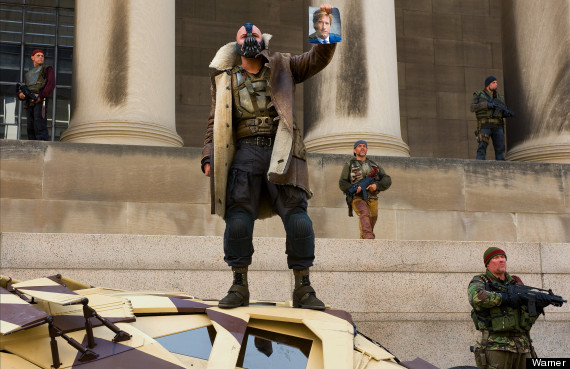
The Police State Rises. Oops, I Mean the Dark Knight Rises


I was a comic book aficionado before it was cool. Or "edgy" or "fly" or "pimp"or whatever it's called right now.  And the Batman was my favorite masked hero even before that 1988 Tim Burton movie rescued the Dark Knight's reputation from the awful legacy of the '60s TV show. Even before Frank Miller's "powerful reinterpretation" a few years before that.

I'm not a fair weather fan. And as a die-hard fan, I felt adequately qualified after seeing Batman Begins in the theater to proclaim it the best screen adaptation of Bob Kane's cowled vigilante.

The sequel, The Dark Knight, was a nice effort, but really two movies wadded together, trying to accomplish too much for one feature film...as so many superhero sequels do.

I just returned from opening night of Dark Knight Rises.

It's a crowd pleaser, and I have no doubt it will do great box office. The special effects were spectacular, of course. It was nicely plotted, in that it plucked at the emotions in the logical places, gratifying the audience with Pavlovian aplomb.

The script is based on a run in the comics which had the Batman severely injured after a battle with Bane, and a substitute (Dick Grayson/Robin/Nightwing for a while, maybe, but I had pretty much stopped following comics by that point and don't remember) dons the cape and cowl to continue the crusade against crime.

The film opens with the Batman retired and Bruce Wayne still crippled, not from a fight with Bane, but from injuries sustained battling the Joker and Two-Face eight years ago.

Hmm. He spent seven years abroad before becoming Batman. That would put him at about 27+ at the beginning of his career. Add however long he protected Gotham before retiring, then another eight years and he's over 35--pretty long-in-the-tooth for somebody who has to engage in unarmed combat with swarms of bad guys, and perform death-defying stunts on a regular basis. And if I heard Bruce's doctor right, he has no cartledge left in his knees or elbows. (I lost a little bit of cartledge in one knee and have not been up to half of the physical activities I used to engage in before that.)

When Bane comes to town, Bruce decides to come out of retirement. He straps on a knee brace, sets his cane aside and is right back in the saddle. No explanation is made of how the knee brace fits under his costume unnoticeably, or how it helps his other knee, or either elbow. Do we really need one? I guess not. So the Batman is back in action, with a new toy (a VTOL aircraft), and we are ready for him to kick some super-cundingy.

Jim Gordon, though already Gotham's police commissioner, still resembles the Year One Lieutenant Gordon--packing heat, personally leading SWAT teams and riot squads in heroic cop combat, and performing death-defying stunts of his own while disarming bombs and such. Okay... Maybe police commissioners do that in real life...in places like Sierra Leone, El Salvador or Mongolia.

Another cop character is introduced (Officer Blake), who I kept expecting to put on the bat-armor himself...but didn't.  Yet by the end of the film it is implied that he will be putting on a costume of some sort.

As with all cinematic Batman sequels, the creative think-tank, or production committee, obviously dictated that one villain (Bane) would not be enough for this film, and so we have R'as Al Ghul's daughter Talia show up, as well as Catwoman fulfilling the obligatory amazon superninja role, in a predictable "bad girl with a heart of gold" incarnation. (But at least she started out as a cat burglar, and I'll take whatever faithfulness to the comic canon I can get.)

That same circlejerk...er, creative think-tank, I mean... had a "raising the stakes" orgy during preproduction. Bane (who it turns out is also connected to the League of Shadows from Batman Begins) isn't content to just destroy Gotham as Al Ghul tried to do. Nope--he's gonna nuke it off the map. But not before utterly destroying Bruce Wayne financially--by movie's end Bruce will have lost Wayne Enterprises, his own fortune, Alfred...temporarily, and Wayne Manor (which includes the Batcave and all its goodies). Oh, and his secret identity. Again.

I don't completely understand this, but every film maker tasked with bringing a superhero to the screen is obsessed with exposing the identities of the masked heroes they depict. It's like a fetish or something. Not only does Bane, Catwoman, Talia Al Ghul, Commissioner Gordon and the aforementioned cop (Blake) join the ranks of those who know the Batman's "secret" identity, but the Wayne Foundation's secret research and development complex (the Bat-arsenal) is exposed for all of Gotham to see. In fact, Bane's mercenaries use (and destroy, of course) the spare Batmobiles stored there.

In his first tussle with Bane, Batman conveniently forgets how to fight. He telegraphs every punch, and can't get out of the way of equally telegraphed blows from his Sean Connery-sounding assailant. His spine is dislocated (if not broken) by the end of the struggle, to the point that vertebrae are protruding from his skin. But after some prison chiropractic techniques, a few push-ups, pull-ups and situps later he is in peak condition (at 35+ with no knee or elbow cartledge, scarring of the liver and accumulative brain concussions) to go kick Bane's mercenary butt this time. Because, you know, he's heard some motivational dialog, and he's learned how to manipulate fear and hope, and all that will give him the edge he needs. Oh yeah, maybe he'll cut back on the Western Union roundhouse punches, too.


The ending borrows from Miller's Dark Knight Returns in a couple ways...also Superman Returns and First Avenger in the hero-as-savior aspect. The writer(s?) and director go from rebooting the Batman canon to obliterating it with gleeful abandon. By the film's conclusion there is no possible way for the Batman to continue his war on crime in Gotham City according to the Bat-mythos we are familiar with. At least until the next reboot.

What annoys me most about the latest Bat-flick is what's going on under the surface. There is a message hammered into the audience, both visually and thematically, which goes beyond the law-and-order platitudes of most cop flicks.

Bane is a well-armed, shrewd, manipulative agitator who incites anarchy by taking the city captive while encouraging the populace to liberate themselves. Anarchy ensues, and Bane gives people guns! (Cringe, hiss!) Just in case you don't find armed citizens scary enough, he also breaks open a penitentiary (or was it Arkham Asylum?) and arms dangerous, hardened criminals, too.

Visually, director Nolan was careful to show that the heroic, altruistic Gotham Police were outgunned by the rabid mob. But this mattered little, as only a few shots were fired before the courageous guardians of order clashed with the freedom-crazed agents of chaos. Then the weapons disappeared and a hand-to-hand rumble ensued. Sure. I'd use fists instead of firearms when involved in a street war with thousands of combatants. Wouldn't you?

Bane, for all his revolutionary rhetoric, cares nothing for the army of gun-toting rebels he has mobilized, fully intending to destroy them along with the world order he so despises.

Irony abounds, here.

First you have a story lionizing an anonymous vigilante while simultaneously implanting establishment attitudes about "legitimate" authority (and its monopoly on coercive force). This is nothing new in Batman stories, but it's worth pointing out.

Then there's the sympathy for the "Occupy" movement woven into the plot, while qualifying it by showing the benevolent nature of super-billionaires like Wayne who are selflessly helping the proletariat, even though they suffer the scorn of classist critics like Selena Kyle/Catwoman. Kind of like how Michael Moore supports the Occupy movement and demonizes capitalism while getting fatter off the capitalist system. Or how George Soros, the international bankers and other super-billionaire insiders clandestinely support the leftist movements out to destroy the system they took advantage of to reach their lofty positions.

As mentioned, Bane is effective at stirring up revolutionary fervor among the weak-minded gun-toting masses, but he himself doesn't give a flying rat carcass about them or the cause he has seduced them with. He just wants to see the world (Gotham) burn. This betrays the Hollywood/media assumption that popular grass roots movements opposed to our national tailspin into socialist police statehood, at their core, are simply collections of brainless rednecks being manipulated by mercenary svengalis (Palin, Limbaugh and Beck, for instance, as the left-wing mind imagines it) whose only real motivation is personal gain. A compounded irony is their failure to recognize actual individuals who fit that svengali role, like Jesse Jackson, Al Sharpton and Michael Moore. (They would be out of jobs if race hatred or the machinations of Wall Street bankers ever came to an end.)

Bane and others pontificate on fear, and the importance of training yourself what to be scared of. Meanwhile the film makers are trying to train the audience what to be scared of: liberty (= anarchy); rule of the people, by the people and for the people (= mob rule and abolishment of due process); and a citizenry bearing arms (= uncontrolled violence on an epic scale).

Batman's "no guns" rule is overtly invoked, though Catwoman saves his life by using one such dreaded weapon. Officer Blake is horrified, at one point, that shooting two bad guys attacking him resulted in fatalities, and tosses his pistol away in remorse. Even so, he uses firearms later to save himself and others.

But the biggest irony is the propaganda victory of the shooting in Colorado. During a screening of this pro-police-state film, some whack-job with a protective mask, tear gas, and, of course, a firearm, murdered enough people to demonstrate just how dangerous it is when the state doesn't have a monopoly on coercive force. And what atrocities occur when people cling to liberty instead of sacrificing it for security and the greater good. The threat of chaos if law and order isn't enforced with an iron fist.

It is highly doubtful this crisis will be allowed to go to waste.

I would not be surprised if new "gun control" legislation, complete with provisions outlawing gas masks, was drafted before the smoke even cleared out of that Colorado theater. And more will be discovered about the shooter in days to come, too. Did he ever attend a Tea Party event? See, I told you those creeps were dangerous--better crack down on them. Did he ever voice criticism of Obama? See, I told you only racists and whack-jobs held those kind of opinions. Better outlaw "hate speech," too. Oh, wait...we're already working on that, aren't we?

(This just in: The murdering whack-job in question has been identified as James E. Holmes, someone involved in the Occupy movement, not the Tea Party as the Obama Administration and network news will want you to believe. Holy irony, Batman! If the press suddenly shuts up about his political affiliations, you'll know this is true.)

It's unrealistic to expect any film maker allowed to work in Hollywood to keep their left-wing globalist worldview from coloring their work. So, up to a point, I take it in stride and try to enjoy movies anyway. I didn't allow myself to consider the political untertones in the two Batman movies before this. I wanted to like this one. The Batman is a fantastic character and deserves fantastic adventures, whether on the big screen or the comic page. This story is fantastic when it comes to stunts, explosions, imagery and "what's at stake" plot-wise. It is not so fantastic in other ways; and offensive to me in a political context.

Batman Begins is still the best Bat-flick yet, in my opinion.